lunes, 30 de septiembre de 2013

Samsung Reminds Apple That It Released Gold Smartphones First

When competing for the global smartphone crown a company can't afford to allow its competitors, or the general public, to detect any lack of confidence in its own wares. But on Friday, Apple's chief rival, Samsung, blinked. In a message posted to the company's blog, Samsung indirectly acknowledged the popularity of Apple's new gold iPhone 5S by posting a kind of "us too" gallery of all the phones it has offered in gold.

Marked as an editorial, the post states, "Everybody loves gold, which is why we sometimes make phones in that color. (Or sometimes even with actual gold for the body!) See below to check out some of the phones we've released in gold in the past…"

The blog post was likely crafted in response to voices on social media channels like Twitter that took Samsung to task for claiming (indirectly) earlier in the week that it had a gold smartphone on the market before the iPhone.

On Sept. 26, on the official Samsung Mobile Arabia Twitter feed, the company posted the following tweet:

For those who haven't been keeping score, the iPhone 5S was released on Sept. 10, so Samsung's reference to that date appears to be an attempt to remind consumers that it offered a gold smartphone first.

The gallery embedded in the blog post showcases eight different gold Samsung phones including a special edition 2008 Beijing Olympic Games Phone, a 2007 Ocean's 13 model and even a flip-phone dating all the way back to 2004.

But for many commenters chiming in on Twitter, and even on Samsung's own blog post, the entire gold affair appeared to be a defensive move to counter the excitement around the gold iPhone 5S.

Whether the tactic wins over Android fans looking for their own golden smartphone or not, what this small public relations episode indicates is that –- no matter the color, the number of features on either phone or global market share numbers –- Apple is still in the lead as a trendsetter, even as Samsung continues to close the gap.

Image: Flickr, Fiona Thomson

Amazon Paperwhite Is the Best Digital Reading Experience Money Can Buy

I don't miss books — not their smell, weight nor feel as I turn the page. This is largely thanks to products like Amazon's Kindle Paperwhite. The ereader and its competitors, including Barnes & Noble's Nook Simple Touch, have continually raised the technological bar, while bringing the ereading experience closer to what feels like perusing an actual book. The new sixth-generation Kindle Paperwhite now nearly matches print tomes for visual clarity and quality, is just as easy to navigate and, of course, does things no physical book could ever do.

Amazon, which recently unveiled a new collection of full-blown Kindle Fire Tablets that use HD LCD screens, shows no sign of abandoning the E-ink-driven ereader market. Although the 2GB Wi-Fi Kindle Paperwhite costs $119 and an entry-level Kindle Fire HD costs just $139, Amazon CEO Jeff Bezos told us that he believes readers should buy both kinds of hand-held products. I tend to agree. (An ereader is primarily a reading device and a tablet is for web browsing, email, games, video, social media and more.)

Kindle's Paperwhite was already an excellent digital-reading device, but thanks to a number of component-level and software-based enhancements, it's now virtually unmatched in performance and usability (until, at least, the struggling Barnes & Noble reveals its latest Nook ereader).

Inside

Externally, the Kindle Paperwhite looks exactly the same as its predecessor (6.7 inches x 4.6 inches x 0.36 inches with a black, plastic body). However, Amazon execs told us that at 7.3 ounces, the new Paperwhite is slightly lighter than the previous one. I couldn't really tell the difference, though. especially after putting both of them in cases.

The real differences are inside. Amazon told us that the new Paperwhite features a 25% faster processor, which should make virtually every operation on the device faster than the fifth-generation Kindle ereader. In side-by side comparisons, the new Paperwhite was faster, but not noticeably so. I would say the screen transitions were sharper, and animations — which are tough to do on E-ink in the first place — looked a bit smoother.

Amazon also significantly increased the complexity of the touchscreen grid. This change was far more noticeable, as I ended up with fewer false touches when I selected text, navigated from page to page and selected the new Kindle software-based features.

Last year, LED lighting was the big new thing in ereaders. Amazon and Barnes & Noble both introduced new devices featuring these internal light sources. Barnes & Noble's was slightly better because they did a better job of shedding consistent light over the top of the E-ink page. Now the Kindle Paperwhite has the edge. Amazon significantly improved the light channels at the base of the device to decrease the blooming effect that appeared with the last Kindle. Reading in a darkened room, the Kindle Paperwhite's lighting looked great.

The reading screen also looks great because the latest E-ink technology is noticeably better. Contrast is much higher so the grayish background of the page (areas without text), now looks much closer to white, or at least the off-white of a standard printed page.

Reading is Fun

Paperwhite-page-flip

At its very core, the Kindle Paperwhite is a reading device. Sure, it has an experimental web browser that almost no one uses, and the ability to register with and share from two of your favorite social networks, but it's really about reading. Fortunately, Amazon has added a couple of new tweaks that actually improve the overall experience.

The main one is Page Flip. Put simply, it lets you skim through books in much the same way you might a physical book. A touch of the menu bar at the top of the screen (it only appears when you touch the screen in that area) reveals a new navigation bar at the base of the screen. When you touch that, a slider appears. It lets you skim through pages and chapters, all while giving you completely readable thumbnails of the pages. To navigate to one of the pages, you just tap the thumbnail.

Page Flip worked well, though, sometimes it was a bit hard to control when the "flipping" would actually stop. I assume that, with some practice, I'll get better at flipping through digital pages so they don't fly by like an animated flipbook.

In general, though, I love this enhancement. It may sound like a fairly small thing, but for anyone who has been reading ebooks for years and found their myriad navigation and bookmarking methods inadequate, digitally thumbing through a 900-page tome is a godsend.

New Tools Galore

Like so many other improvements, Page Flip is intended to help the Paperwhite achieve the overarching goal of most ereaders: to make the experience as book-like as possible. Beyond that, it's getting hard to see how much more Amazon can improve the "reading" experience. However, Amazon is not shy about taking advantage of the Kindle Paperwhite's digital nature to add features, like X-Ray, that are impossible in print.

X-Ray is the tool that lets you learn more about any topic in any book you're reading. Along with the explanation, it shows you every instance of that topic/character/place in the book, lets you see the term in context and, if you choose, navigate to that page in the book. The Kindle Paperwhite's new software also enhances lookup features by combining the dictionary, X-Ray and third-party sources like Wikipedia into a tabbed interface it calls "Smart Lookup," which appears when you hold your finger down on a word. This worked perfectly for me.

Paperwhite-Flashcards

In my view, books, even those I read for entertainment, are about learning, whether it's about story structure and character, or new locales and exotic vocabulary. I'm not ashamed to say that I often use Amazon's built-in dictionary to look up words. When I read physical books, I almost never stopped to pick up a separate dictionary to look up an unknown term. All ereaders have made this easier, but the Kindle Paperwhite may be the first one that collects the words you've looked up and then quizzes you on them.

A new feature called Vocabulary Builder (which has a dull cover and was sort of hidden in my Cloud collection) collects all the words you've looked up across all the books, magazines and textbooks you've been reading on the device. It lists the words either by book or as one large list. A tap on any one of the words reveals its dictionary definition and usage, and there's also an option that lets you delete the word from the Builder. The best part, though, is the Flashcards tool. Flashcards show you the context of the word, with the definition hidden on the other side. You can flip through the cards until you think you've mastered them and then delete the cards.

Another new feature that should appeal to the fact-checker in all of us is the Inline Footnotes tool. This works exactly as you would expect. A footnote has a little number over it, but instead of having to flip to the end of the ebook, you can now tap the number on the Kindle Paperwhite screen to see the footnote reference in a pop-up window. Both this and the Vocabulary Builder work smoothly, and each could be a real boon for students.

Not Yet

There were a couple of newly announced features — Goodreads integration and FreeTime parental controls — that I couldn't test because they haven't arrived on the Kindle Paperwhite yet. However, Amazon has promised that these features will be available soon. In the meantime, I didn't miss them much. Amazon's Kindle Paperwhite is really all you could want in an ereader: a great, clear E-ink display, a super-responsive touch screen, a smart, intuitive interface and a reasonable price.

You can certainly choose to spend more for the Whispernet 3G edition, which will give you access to the Amazon bookstore and ebooks wherever you are. But with near ubiquitous Wi-Fi and the fact that most of your time will be spent reading books and magazines stored locally on the Kindle Paperwhite, I don't see why you would.

The Lowdown:

The Good: The Amazon Kindle Paperwhite is a pleasure to use, with crystal clear text and natural, book-like navigation.

The Bad: The Page Flip feature is awesome, as long as you can get it to slow down.

Bottom Line: If you want an ereader — and who doesn't — it's hard to do better than this device.

Image: Mashable

What Games Are: Steam's Big Bet

Editor's note: Tadhg Kelly is a veteran game designer and the creator of leading game design blog What Games Are. You can follow him on Twitter here.

There had long been hints that Valve was up to something. Hints like Gabe Newell decrying the state of Windows 8 and speaking in favor of Linux. Hints like Big Picture, the TV-like dashboard. Hints like the Xi3?s boxy little machine. With new consoles and microconsoles starting to pop into existence, this week Valve finally revealed its answer: SteamOS. Steam Machines. Steam Controllers. Boom. Its ambitions are not to launch a console but a whole solution for home gaming entertainment.

In a sense it has to.

Valve's Problems

For Valve and many other studios the decline and fall of the PC is a slowly dawning apocalypse. Sales of gaming PCs may be up while the rest of the market is down but there's a point at which the support that comes from the wider PC ecosystem starts to dwindle. Perhaps video cards start not keeping pace. Perhaps driver software becomes less updated. Perhaps commoditized components stop being cheap and PCs become much more expensive. The knock-on effects of this decline could wipe out Valve, Blizzard and a number of others.

However Valve's second, and largely unique, problem is that a recovery in the PC space implies tighter integration of the platform by Microsoft. With the purchase of most of Nokia and a search for new leadership underway the Wyrm may finally be starting to turn at Big-M. Windows 9 (or 8.5, or whatever) may well turn things around. If it does though it will be for a Microsoft that's far more interested in device-and-service thinking. It will mean more prominence for the Windows Store. It doesn't compete much with Steam today but one day it will.

Finally Valve's third problem is its ecosystem. It has a massive following of both players and developers. Steam is perceived as art house venue of games and every indie wants to be there. That ecosystem has evolved hand-in-hand with the PC paradigm since its inception and is resistant to fundamental change. Steam's adoption took forever and required deeply discounted sales to overcome suspicions. Nowadays it's huge but that doesn't mean its audience is ready for a big shift.

These problems have essentially defined Valve's next generation solution, but they breed problems of their own.

SteamOS

A few weeks ago at LinuxCon 2013, Gabe Newell gave a talk about the future of Linux as a gaming system. Obviously this was something of a preach-to-the-choir crowd and so the talk was warmly received, but outside of its domain does anyone really care? Linux may be powerful but it's also geeky. Getting into it requires rolling up your sleeves and doing some digging. It's cool for motivated people but for everybody else (even the comparatively savvy gamer crowd) it's a chore. This is why, although it has had Linux support for a while, Steam is still largely a Windows client in most people's eyes. It's just easier to make and run games in Microsoft's house.

With SteamOS Valve is trying to be the Android of the game consoles, to do the hard work of taking a cool kernel and make it user-friendly. The company sees itself as providing a nexus solution to everyone's problems, and maybe even harboring hopes of Android-sized success. Manufacturers can use SteamOS as the core of a gaming deck that they would then sell, creating a class of home-hub devices that would be a bit like consoles but also their own thing. There would be choice and range in the market yet a common platform to power them all, much like today's PC. And there would be neat features like streaming games across your home network. Like an Apple TV and iTunes.

Sure, but the big problem with that vision is developer support. The majority of games in the Steam catalog are old, all created for the Windows PC paradigm. They're built to work with mouse, keyboard, DirectX or OpenGL and so on. Support for updating them to work on modern Windows machines is hard enough, but to shift platform? Many don't.

As an anecdotal example, I own about 150 games through my Steam account. Only about half of them work with Mac. The other half are either pending support or simply won't ever have it. The Mac is arguably much more stable and better supported than Linux PCs tend to be, and yet plenty of game makers are not bothered. They can't make the business case for it to be worth the effort. So what hope does Valve have of convincing risk-averse game developers to create full ports of existing games for SteamOS? Or even convincing them to make original games designed specifically for the OS?

On the face of it, very little. Game makers tend to be look-before-you-leap types (as I have often argued, to their cost) which means new platforms often have to deal with chicken/egg paradoxes. You can't get interest in your platform without great games, and you can't get great games on your platform without proving it has significant interest.

For non-dedicated gaming platforms like PCs, iPhones and Facebook this problem tends to resolve on its own because so many people buy into the platform for other reasons that game makers overcome their skepticism. However dedicated platforms usually have to solve it by opening their wallets. That billion dollars that Microsoft is ploughing into Xbox One for game development? This is why.

If a platform essentially offers to pay game makers enough to make it worth their while, they'll dive in. But is Valve really willing to do that? Sure it has its own key franchise in Half Life 3, but I seriously doubt it will make the mistake of making that game Steam Machine exclusive. If it is relying on providing the platform and then hoping developers will support it, it will need to sweeten that deal somehow.

Steam Machines

Irrespective of the support question, the strategy of being the Android of game consoles reminds me of Microsoft's Windows Media Center adventure. The basic gist of WMC was a mini-PC sitting under your TV and acting as a powerful hub for all your entertainment. It was primarily for movies and recording TV but had other conceivable uses too, such as games.

This idea has always been compelling to some people yet it's never really taken off. One reason is that the hardware has sucked. It's been expensive, underpowered and far more fiddly than it was supposed to be. The living room is not the desktop and does not induce nearly as much tolerance for messing around to make something work. Does anyone really want to have to faff about with their home hub while their family looks on? People want a product that they are confident will not be like that.

Existing console platform manufacturers tend to shy away from multiple-manufacturer ideals for precisely this reason. Similar to the difference between today's iPhone and Android, working with partners tends to detract from control over the user experience and leads to fragmentation. Standards can not be enforced nor compliance ensured. The cognitive load that this places on the user is high, which the user then finds discouraging. The guarantee that every game will just work can not be assured.

So one of my big fears for Steam Machines is that the balance of power between Valve and its partners will favor the partners. The partners may want, for example, to bundle their own dashboards in their machines and develop their own brand relationship with their customers. We see that happening all the time on Android, so why not SteamOS? All that deluded cruftware that you get when you buy an OEM PC? Imagine that under your TV.

My second fear is that Steam Machines will turn out underpowered. Valve may want them to be top-notch but partner manufacturers often have to rationalize the cost of production and shave a bit here and there to make a profit. Ecosystem-led approaches tend to result in halting periods of innovation as a result. For some audiences this wouldn't be a problem, but for PC gamers it is. The perception of being behind is not one they enjoy.

Look at Microsoft's attempts to make Windows-powered tablets and phones work. For years the idea was to partner with everyone and let hardware sort it out, as it had in PC. The result was years of bad Windows Mobile phones and awful touch PCs. Instead the company had to pivot from software to devices and just make the units themselves (or with Nokia). It had to because it's in the nature of OEMs to sit back and make smaller innovations with low-powered (and often just crappy) tech. But to compete with iPad Microsoft needed something much bolder.

While they may have their flaws, one thing that Xbox One and PlayStation 4 will be good at is delivering super-lush (and reliably so) games. Like the Surface or the iPad, the vertical control over the platform has a lot to do with that. I suspect a similar story will play out for Steam Machines, and that Valve will eventually conclude that it should just make its own. It goes against the DNA of the company in many ways (it's used to working with lots of others) but still.

My biggest fear for Steam Machines, however, is price. Sony is able to sell PlayStation 4?s for $400 because it's taking a significant cut from each game. The console is probably being sold at cost price, or even below, because higher prices tend to make customers queasy. Unless a platform has a deeply held marketing story of being much better (say Mac vs PC) then it can be very hard to make a case to customers that they should pay more.

I just have a hard time believing that there are many gamers out there willing to spend $900 on a console, when one of the big cheering points of PS4 vs Xbox One was the $400 vs $500 starting price. Gamers who want big games will be able to buy a dedicated console for half my guesstimated price of a good Steam Machine. Meanwhile the ones who want indie or casual games will be able to buy something an OUYA for $100. All in all I think this hub strategy means Valve's primary customers for Steam Machines will be the people who are already invested in Steam, and only a subset of those who haven't already shelled out a couple of grand on a big PC gaming rig.

Which leads me to…

Steam Controller

For a long time I've wondered who would properly reinvent the modern joypad and do something cool with it. Joypads have been ungainly multi-pad multi-button affairs for a long time, holding on to legacy features like D-pads long past their sell-by date. So I love the idea of the Steam Controller. While the initial renders of it look kinda kooky, I'm excited.

And yet: Do PC gamers want to move away from their mice and keyboards? Irrespective of the problems looming over the PC landscape and how they might be an issue for game makers down the tracks, don't people who go out and buy gaming computers do so because they like to game on computers? Do they actually want to go console at all? Joypads have been available for PC forever yet haven't ever really made the leap into being considered a part of the default spec. They still lack support in many games, and there's a strong resistance to them from the pre-existing community. It simply believes M+K to be best, and for many types of game it is.

And also: Do PC gamers want to move out of their bedrooms and into the communal living room? The guy who plays MMOs night after night in private doesn't necessarily want to do that in shorter bursts on TV because his family wants to be able to watch Netflix. The quirky indie fan might prefer the experience of being absorbed in Amnesia: A Machine for Pigs by a screen close to her face. Closer screens blot out the world more effectively than the at-a-distance feel of TV gaming.

Admittedly that's a somewhat archaic view of modern family life, yet one that still makes me ponder. While it is possible to cross-sell users from one platform to another (Apple and Nintendo do it all the time), with PC gamers there's often a component of the deliberate choice. They have often played many a console game (such as the good folks at Rock Paper Shotgun) but ultimately decided they preferred computer gaming. They are the reason why gaming PCs boom as all other PCs fall.

So I just don't know that joypad gaming will ever be for them.

Streaming and Funding

Valve's biggest asset is the legion of fans willing to give Gabe the benefit of the doubt. That's no small thing. It's other big asset is its methodical approach and willingness to keep driving at a problem until it's solved. It did it with Steam, turning a much-hated e-commerce barrier into a thriving community over the course of half a decade. So while I may have questions over what the company has recently announced, I firmly believe that it will answer them in the long term.

Steam Machine's likely success comes down to the price of the consoles and the support of game makers. This is why perhaps the most interesting announcement from all of this week's news was game streaming. You'll be able to stream your Steam games to your SteamOS console under your TV and play them across your local network. Hopefully that won't be as laggy as remote solutions like OnLive turned out to be.

While customers might struggle to buy into the idea of a $900 console, they'd be much more amenable to a $100 Apple TV-sized streaming unit. I could, for example, see a partnership with folks like OUYA to develop a SteamOS player. I could see something similar for Android tablets, particularly if the Steam Controller could be made to work with those systems. Perhaps by doing something in that vein the company could get access to the living room without all the overhead.

And then what about the actual PC? If Windows is slowly sunsetting that doesn't necessarily mean that the PC form factor will go with it. The PC game player will still want a gaming computer to enjoy her MMOs in her bedroom. While SteamOS has been pitched as more for the living room than the desktop, why not also have a desktop edition?

As for game support Valve has one big advantage that it's not yet using well. Through efforts like Steam Greenlight Valve has brought its community into the publishing process, which has given many indies exposure. The missing piece, which I've previously argued, is crowdfunding. There's no good reason other than reticence why Steam isn't essentially the Kickstarter of games (even more so than Kickstarter itself), and if it were then the resulting funds would encourage game makers to get on board with Steam Machine.

If Valve could pin crowdfunding to its new console platform together then the sky could be the limit. However it remains to be seen whether the company is willing to take that step.


'Breaking Bad' Stars Send Emotional Last Tweets Before Series Finale

The cast of AMC's acclaimed drama Breaking Bad tweeted their final emotional messages to fans before the Emmy-winning series ends Sunday night.

The spoiler-free tweets arrived hours before the fifth and last Breaking Bad season concludes, although remnants of the popular show will live on through an AMC spinoff series about criminal lawyer Saul Goodman. The spinoff is tentatively titled Better Call Saul.

At the Primetime Emmys, Breaking Bad creator Vince Gilligan admitted to Mashable that the show may have met its demise after season two had it not been for streaming video on demand: "It's indeed a golden age of television ... I think Netflix kept us on the air."

Spurred on by the official @BreakingBad_AMC account, fans are using the hashtag #GoodbyeBreakingBad in their tweets. The series finale airs at 9 p.m. ET.


In addition to these tweets, Aaron Paul is holding a fun Twitter scavenger hunt for fans to find tickets to a screening of the finale:


Here is AMC's sneak peek at the Breaking Bad finale:

Image: Mashable, Nina Frazier

domingo, 29 de septiembre de 2013

Advertising's Logged-In User Revolution Is Brewing

logged-in1Editor's note: Jack Krawczyk is director of product management at Pandora. Prior to Pandora, he helped build Paid Discovery at StumbleUpon and was a founding member of Google+. Follow him on Twitter @jackk.

Native advertising may be the buzzword stealing the attention of the advertising technology landscape, though a much quieter revolution is brewing around the space: the fight for the logged-in user overtaking cookie-based advertising.

You see it manifesting itself from all corners: Google's relentless investment in Google+, Facebook releasing Custom Audiences, and most recently Twitter's acquisition of MoPub. Data management companies like Datalogix and Catalina Marketing are creeping up, matching what takes place online into offline purchases.

At the center of this brew: the logged-in user. An ever increasingly valuable asset in the world of digital advertising with an inherently limited distribution, the logged-in user is quietly becoming the lynchpin from which mobile advertising will blossom.

Cookies have historically been the little text file that can, producing a swarm of cross-publisher tracking data that have fueled the $40 billion+ digital advertising industry in the United States over the past 20 years. Monitoring your behavior from site to site, the cookie was able to compile unique information about your browsing habits across ad networks.

Cookies have historically been the little text file that can.

This meant that companies like American Express could drop a tracking cookie once you logged into their site to uniquely identify you as an existing Amex customer. Then while later browsing the Internet, Amex could work with an ad exchange to bid on all users that had their existing cookie. Voila: retargeting!

This approach has built the display advertising industry, but it's facing two major problems: One, cookies from external sources are dying; two, cookies do not translate to mobile. Enter the logged-in user revolution.

The Logged-In User

Without trivializing the evolution of the ad unit driven by native advertising, logged-in users are rapidly becoming the asset from which mobile marketing will be evaluated for its efficacy, regardless of the format with which the ad is presented to the user. The reason for this? Logged-in users are uniquely keyed by their email address.

ROI has always been at the core for measuring ad spend. The logged-in user is driving us to improve the resonant impact of advertising on purchase behavior.

Traditional media formats like TV and radio have needed to rely on post-exposure surveys because they have never had ways to isolate unique ad impressions. TV and radio ad spend ROI has always been a best guess, as the Nielsen panel, which dictates the $60 billion+ spent on the medium, only pulls from 25,000 households (0.2 percent of the U.S.).

logged-in-f1Google entered the picture and changed direct response advertising from an inferred impact model into a direct keyword to conversion ROI report. The limitation of search, however, is that consumers are most often not in the mindset of making a purchase.
For this reason, brand advertising has typically commanded two-thirds of marketers' budgets. This comprises $91 billion of total ad spend in the United States each year. Dollars that search does not gain access to. Dollars that will be driven by the logged-in user.

The goal of brand advertising is to drive a lasting image, memory or emotion between a consumer and the brand driving the advertising. This resonance then turns to increase consideration of that brand, driving purchase intent and ultimately transforming into a transaction/purchase with that brand.

The challenge with the dollars spent to drive this resonance, however, was that the scale of information and data would often break down between initial exposure and ultimate transaction. Cookies would expire and surveys would be too narrow to follow, but that problem begins to disappear with the logged-in user.

Solving for the impact of resonant advertising is what makes the logged-in user so powerful. Each logged-in user is keyed against a unique identifier: Their email address. Transactions in both the digital and offline space are increasingly tied to CRM systems keyed off of an email. From beginning to end, advertising experiences that have a logged-in user have the data to close the circle on understanding how ad exposure leads to purchase behavior and evolution.

publishers with a logged-in user who can be anonymously quantified in ROI are beginning to enter the ad network game.

The new wave of ad tech companies poised to win are those who are set up to be privacy-friendly brokers of matching the data of publishers' logged-in ad impressions against shifts in behavior in sales. Privacy and opt-outs are paramount to the success of these programs, setting the foundation for evaluating the impact of ad spend using mechanisms previously unavailable to advertisers.

The Facebook Exchange (FBX) has found that it doesn't matter the ad unit, it's about how you convert the user to a conversion event. Companies like Triggit have found that ROI is driven through effective targeting. Expanding beyond the FBX, Videology quietly acquired Collider to drive the idea that content isn't so much king as the reporting behind who was the recipient of that content.

Taking this beyond the walls of their own experience, publishers with a logged-in user who can be anonymously quantified in ROI are beginning to enter the ad network game. Driving an understanding of the map between unique user identification and its value to a brand, acquisitions like MoPub allow Twitter to extend the reach of their most valuable asset: the logged-in user.

Partnering with large panel data services such as Datalogix and Catalina Marketing, consumer technology firms are poised to close the loop on the impact of advertising on their platforms. Combining point-of-sale data against email addresses, they are able to match ad impressions and engagement data against logged in users to determine the full picture of advertising ROI.

Native advertising formats are becoming increasingly effective at driving up front engagement with advertising, driving the activity to manipulate purchase behavior. This trend will continue for the near future, but as we evolve the native advertising discussion let's not lose sight of what will ultimately drive the price of an engagement: its value to the advertiser.

That value? It will come from those publishers that own and understand the logged in user. The revolution is coming.

Disclosure: I do not own a financial stake in any of the companies mentioned.

[Illustrations: Bryce Durbin]

Bizness Apps Launches DIY Website Builder, Looks To Become A Full-Service Digital Marketing Suite For SMBs

Once upon a time, if you wanted your own website, you either had to speak fluent Internet, or write a large check to someone who did. However, thanks to the laundry list of companies and services that have sprouted over the last five years — like Weebly, Wix and Squarespace, to name a few — the barriers to building a snappy website have vanished. Today, website creators are free, and the only technical skill required is the ability to locate the Internet.

Today, as smartphones flood the market, a similar story is unfolding in app development. With their customers going mobile, businesses are eager to do the same. A bevy of services emerged to meet the growing demand, offering businesses a quick and easy way to create their apps for iOS, Android and beyond. Bizness Apps launched in 2010 to do just that, providing companies with a low-cost way to build their own mobile apps and website without needing to know how to code.

But with so many options for DIY site builders, both mobile and desktop, these services have to differentiate themselves from the competition if they're going to stand out — and survive. As a result, many choose to specialize, offering the same basic features as everyone else, while focusing on adding more features and value around, say, social networking, flier creation or shopping.

Like SnapPages, to differentiate itself in this crowded market, Bizness Apps developed a white-label program to allow both companies and businesses to build mobile apps for their existing clients or SMBs in their local area. Shortly thereafter, the startup added a CRM platform to help its white-label resellers sell apps and websites to startups and other SMBs, and today Bizness Apps is adding the last piece of the puzzle.

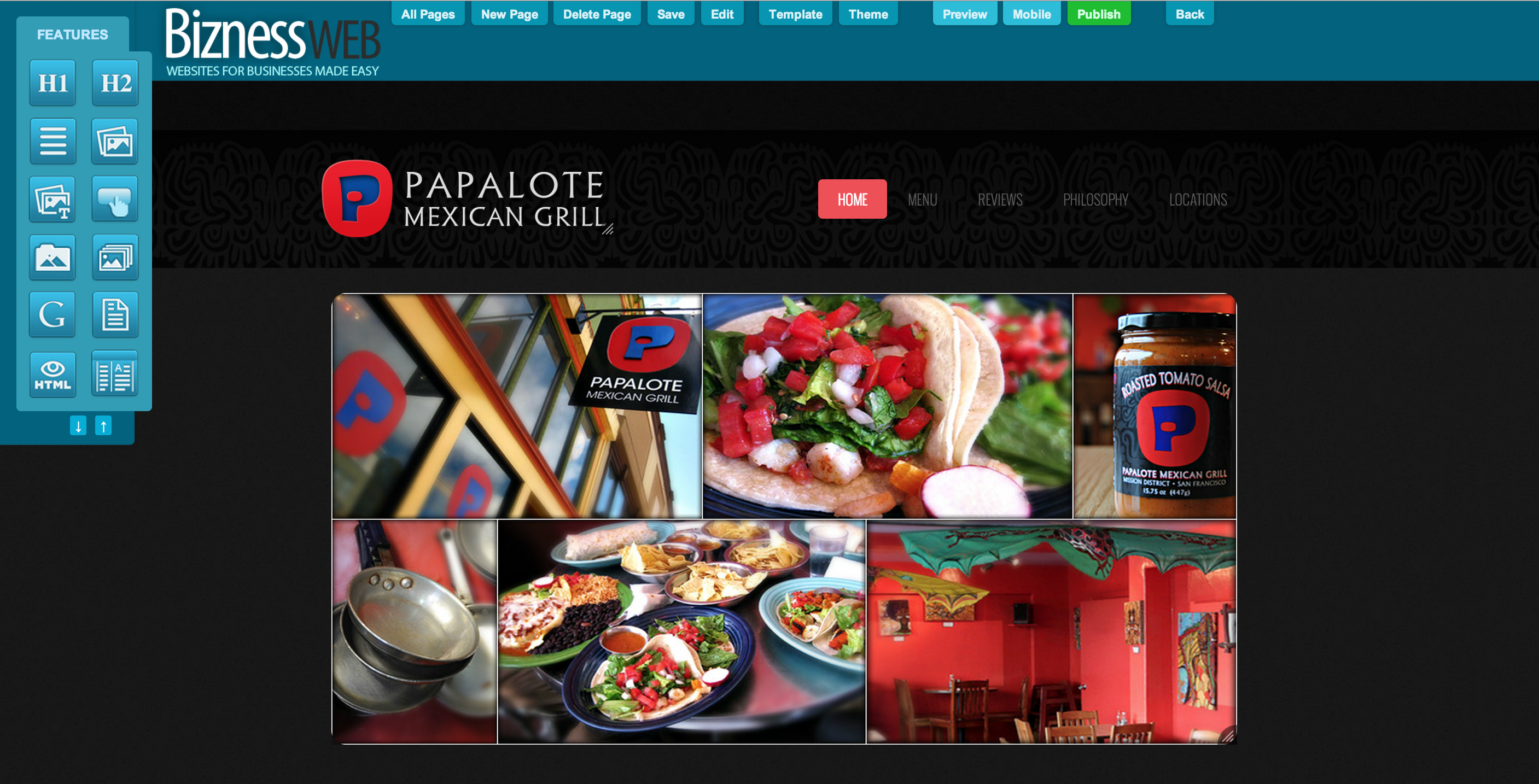
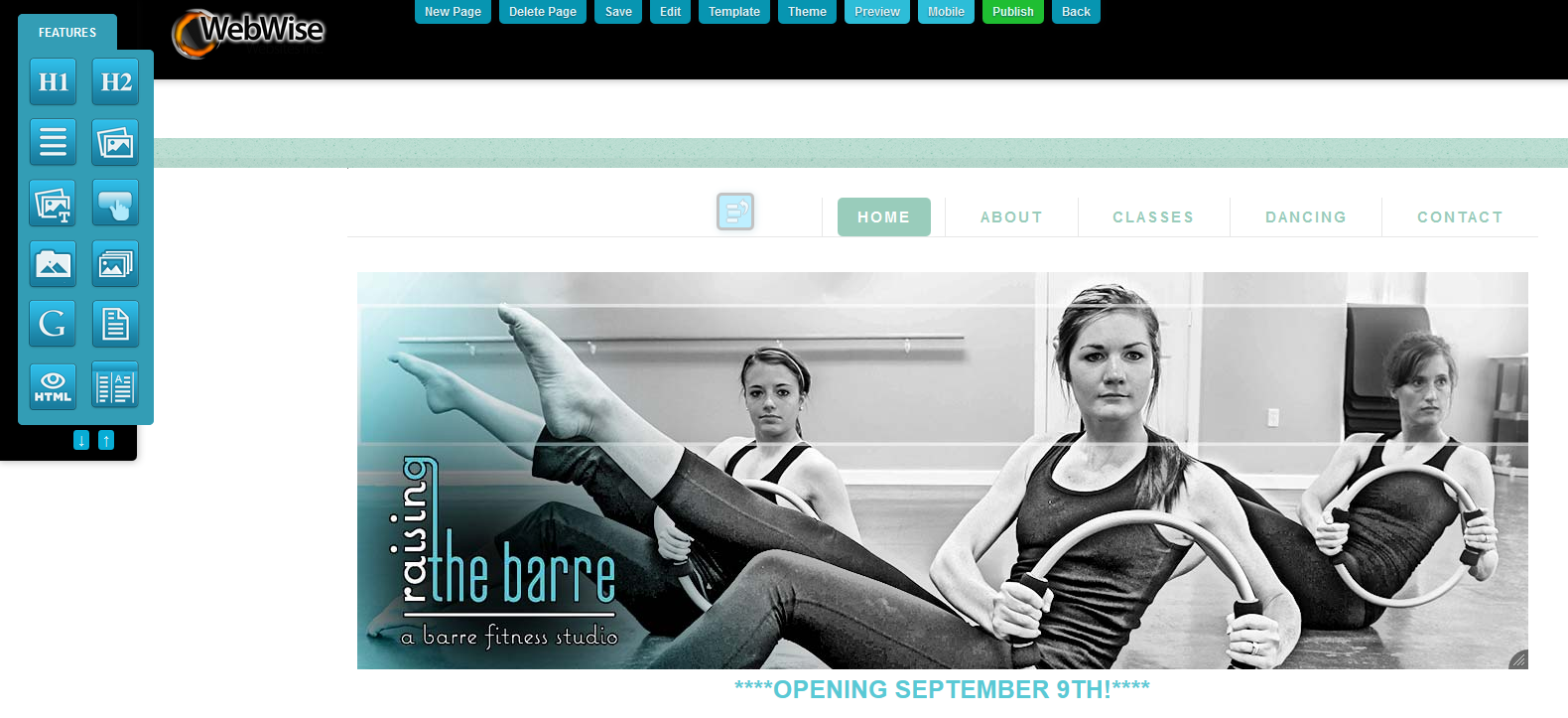
In a platform play that aims to round out its self-service development suite and sees it moving into the realm of the Weeblys, Wixes and Squarespaces of the world, the startup is today launching its own drag-and-drop, DIY website builder, called Bizness Web.

The website creation service will allow SMBs to quickly design and publish a fully-functional website for desktop, smartphones and tablets in under 10 minutes, says founder and CEO Andrew Gazdecki — regardless of technical skill. In an effort to provide businesses with a feature set that's comparable to its competitors, the website builder will offer a library of hundreds of templates, designed to make it easy to get started, along with SEO tools, post-publish editing capabilities, social media integration, custom contact and lead form creation and analytics.

bizness-web2

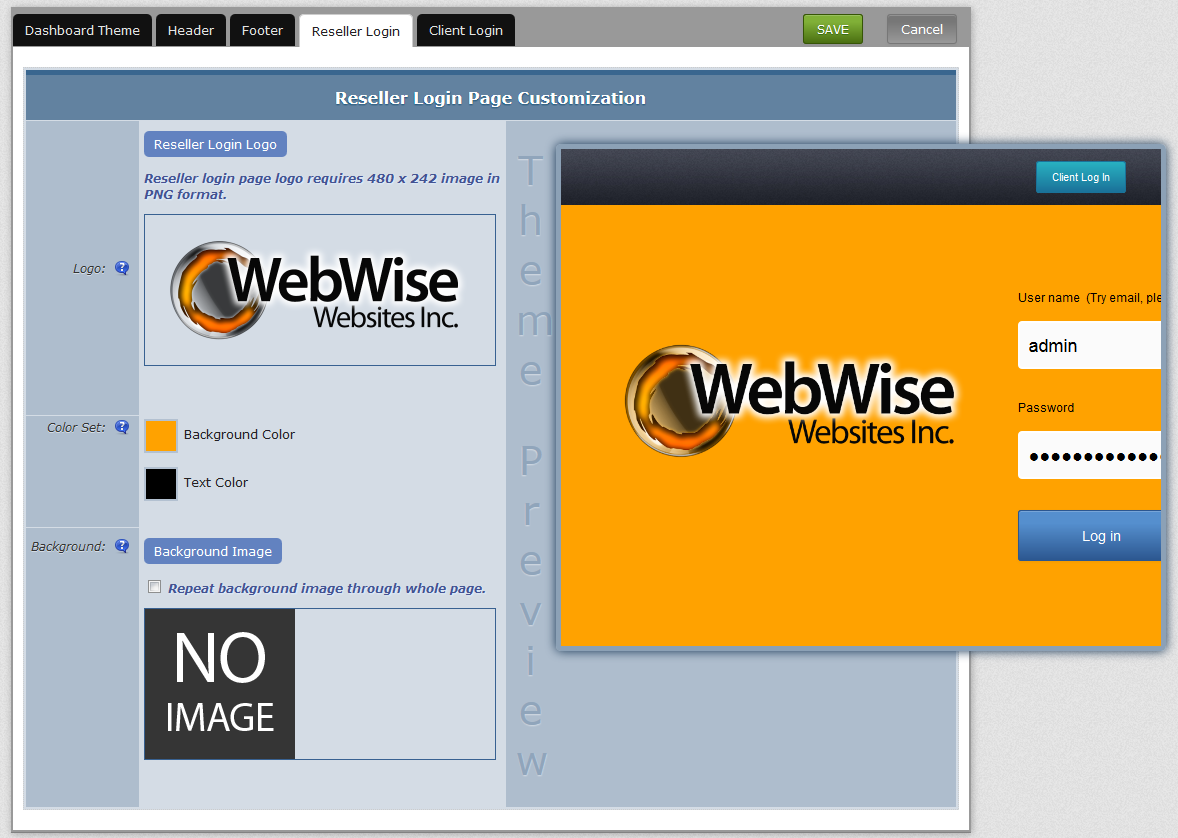
The new product intends takes a similar strategy and focus to its white label reseller program, which provides companies and individuals with the ability to launch their own mobile marketing businesses and develop mobile apps and mobile websites that can be customized and branded according to their client's preferences. The white-label resale tool allows these pop-up app development businesses to set their own prices and provide services developing apps for their local small business market.

The reseller program has also been the company's most lucrative product, driving the majority of its revenue, the CEO tells us. The startup raised a small, $100K round of seed funding after launch, but has been bootstrapped since and is now profitable thanks to a reseller-driven $8 million annual run rate, which the company expects to hit $9 million by the end of the year.

But what makes the CEO think that its new DIY website builder will find an audience and can compete with the most popular services, which today dominate most of the mindshare in the market? Gazdecki says that he sees the small business market existing in two segments, one of which is willing to use DIY marketing tools, and other, which would rather pay a premium to essentially, "hire a pro," as they say.

While Weebly and Wix are mostly focused on the former, the CEO says that Bizness Apps wants to leverage its existing reseller network to provide a more hands-on approach to mobile and website development — even if that requires charging a higher price, and therefore the risk of losing looking for free DIY options. Furthermore, even though the company is playing in an "extremely crowded market," he says, 58 percent of small businesses still don't have a website and the chief reason for this is that they lack the confidence to build their own.

At its core, Bizness Apps' mission is to allow anyone to start their own local marketing company and help local businesses get online, go mobile and manage customers through its three main products. "In the end, we've found that small businesses would rather have marketing services built into this kind of platform," the CEO tells us, "even if it means paying an extra fee."

reseller-web1

Today, the company has 5,000 active resellers around the globe, hailing from over 50 countries and offering services in dozens of languages. Just as its reseller program aims to solve related pain points by giving clients the ability to learn how to market their business and how to approach and sell to small businesses — beyond offering branded apps and websites — looking forward, Gazdecki wants to include more features that help customers get more value out of the platform.

Its resellers often add custom features depending on the market and the client, like a mobile food ordering system, payment gateway and menu integrations for restaurants — so that they don't have to fumble with receipt printer integrations, among other things. Down the road, the CEO says he wants the new website builder to incorporate features like online food ordering, reservations and eCommerce tools.

The company offers its original DIY app product for $59/month for each platform, which includes a native iPhone app, Android app, iPad app, Android tablet app and mobile website, and will be selling its website builder under a three-tier pricing scheme, starting at $10/month under its "small business" option. Its business tier will run $100/month, and includes 10 websites, marketing materials, sales training and a free Bizness CEM account, whereas its "White Label Reseller" plan includes all of the previous options, with the ability to create an unlimited number of websites.

For more on Bizness Web, find it here.

reseller-web3


Should Facebook Start Its Own Version Of Google Ventures?

Over the past year, Facebook has seen its fair share of departures from employees and executives who are either starting a VC fund or camping out at a firm to figure out what their next startup or company will be. In the past two weeks, product manager Justin Shaffer left, and rumor has it he is starting a VC fund. Facebook engineering and product lead Greg Badros announced his departure, and it sounds like he'll be focusing on investing. Former Facebook exec Chamath Palihapitiya has been collecting technical talent from Facebook into his EIR program. And there are many more examples of Facebookers going to VC firms or starting to invest of late. Our question is, why doesn't Facebook just form its own venture group so some of these employees could stay connected to the company?

There are many more reasons beyond just retaining talent for Facebook to form a corporate VC firm. Facebook has a substantial opportunity to do what Google Ventures has done in the VC world. Considering the interest its staffers now have in venture capital and advising startups, Facebook could build a new brand of venture capital. The social network has an enormous amount of talent that has been through the trenches of growth, parsing through large amounts of data, advertising, product development and more. As VCs become more hands-on, Facebook could tap its wealth of knowledge and experience to help portfolio startups. Similar to Google Ventures, Facebook could draw on its enormous base of employees to help grow startups. Facebook has already become an ecosystem with many former employees starting companies, so a company could easily grab great deal flow from its alums alone.

Facebook had already been participating as a partner in larger funds operated by other VC firms. The social network invested in Kleiner Perkins's Fund in 2010, which was a $250 million fund dedicated to backing social startups. Facebook also helped administer the FbFund, a $10 million seed fund that was jointly funded by Founders Fund and Accel Partners to back startups developing websites and applications related to the Facebook Platform. Facebook discontinued the fund in 2010.

The opportunity for investing is so much broader than startups built on the Facebook platform.

From 2006 to the first half of 2012, Facebook alums had raised $271 million of venture capital funding since 2006. As of the first half of 2012, the Facebook mafia had pulled in $130 million in VC funding in 2012 alone. We're sure that number increased significantly over the past year.

Facebook alums and current employees who landed windfalls in the IPO are already actively seed investing. If you take a look at AngelList, there are hundreds of current and former Facebookers who are angels. In Google Ventures' case, Google is the firm's sole LP. While Facebook hasn't stockpiled the amount of cash that Google has, Facebook could do something slightly different with its employees who want to invest, such as make certain employees LPs of a fund alongside the company itself.

When it comes to talent, a corporate VC arm makes sense for Facebook when you consider a number of factors. First, talent that wants to potentially go into venture as an investor can stay within the Facebook umbrella. Clearly we see this happening as experienced operators and product managers at the network are starting to move over to traditional VC firms or start their own firms.

From what we've heard, a lot of Facebook's top employees have been working there since college or right after graduating. Some feel they've "done their duty" to make the world more open and connected. It's not that they dislike Facebook, but they want to try something new. If Facebook created a VC firm, it could be an outlet for taking on fresh challenges without leaving the company entirely.

"FBVC" could create a home for more than just potential investors. For example, Google Ventures employs a number of designers in-house to help its portfolio startups. Many of these designers came from Google. Facebook has had trouble retaining design talent lately, with departures of Instagram's Tim Van Damme, Messenger's Chris Kalani, and Facebook Stickers lead Sophie Xie all leaving in the last two months. Xie just completed a month of contract design work for ex-Facebooker Carl Sjogreen's new startup Shadow Puppet. Perhaps a role as Facebook Ventures' in-house designer could have let her dabble with different companies while remaining part of the Facebook family.

A Facebook venture group would also provide an alternative place for the company's employees to park themselves for a year in an EIR role to figure out what they want to do next. Palihapitiya believes that talent needs this time to really determine what the next role could be. And this would give EIRs the opportunity to team up with other Facebookers to start companies. In the past year, Palihapitiya has been able to bring over a number of key product managers to his firm to simply network and figure out what they can do next. Best case scenario, these Facebookers will team up on a new idea or startup, and Facebook could grab some meaningful equity. Another talent benefit for a Facebook Ventures arm would be to create a second home for great talent that Facebook wants to pick up, but doesn't want to work on executing product or business.

It's worth noting that not every successful technology company has a VC arm. Yes, there's Amazon, Google Ventures, Intel Capital, and Microsoft Ventures; but Apple doesn't have a VC arm (Apple does apparently, have a fund that makes private equity deals). Apple's general investment strategy has been to acquire talent and companies that fit its technology and product strategies, and the company has notoriously been a closed environment. Once you leave the company, you are closed off. Google is on the other end of the spectrum as it has created an ecosystem with its various offshoots, such as Google Ventures.

One complication Facebook would have to deal with if it entered venture is avoiding the perception that its platform favors companies it invests in. That could sour relations with the ecosystem it's built around its login, sharing, backend hosting, and advertising services. Startups might be less enthusiastic to build on Facebook if they feel they're handicapped unless they have Facebook on their cap table.

But as Facebook grows into a bona-fide Internet giant, it needs to do everything it can to avoid the type of stagnation that leads to disruption. For many companies its size, that means acquiring and acqui-hiring to bring in the best talent. And there are few better ways to get a close look at startups to potentially buy than by dangling cash to invest.

Facebook will ultimately have to decide whether it wants to go down the Apple route or the Google path. Perhaps it's too soon, but the company is about to turn 10 years old.