lunes, 2 de septiembre de 2013

When Stalking Steve Wozniak Pays Off

Waseef Akhtar was 14 years old when he got his hands on his first iPod — "an iPod Nano, third generation," he says with a tinge of pride.

The Riyadh, Saudi Arabia native, 20, has since been hooked on Apple products. He has collected a MacBook and several iPhones, and spent three months working as a sales associate at a local Apple Store. As his admiration for the company grew throughout the years, so did his fascination with the team behind it.

In February, in a whimsical 24-hour turn of events, Akhtar met Apple co-founder Steve "Woz" Wozniak while the computer mogul passed through Riyadh. The meetup, and spontaneous hang-out sesh that followed, inspired Akhtar to write a memoir about their day together.

Now, after a few months of editing, A Day With the Woz is available for free on the iTunes Store.

"I found out he was in town on a Sunday," Akhtar tells Mashable. "I met him on Monday. Then he was gone by Tuesday. Everything happened so quickly."

The story plays out a bit like a movie. Akhtar, a recent high school graduate, was browsing the Apple-themed blog Saudi Mac when he caught a retweet of Wozniak's Foursquare checkin at London's Heathrow Airport:

The tweet belied that Wozniak was traveling to Riyadh; Akhtar thought it was too good to be true.

"We never get any celebrities in this town," he says. "When I saw this tweet, I thought maybe he was passing through [Riyadh] on his way to Dubai or something. I didn't think he'd be staying here."

After some digging, Akhtar discovered that Wozniak was in fact staying in Riyadh to speak at a conference on e-learning — but only for two nights. He figured it would be his only chance to meet the man who helped design the products he'd spent half his life collecting. Then he realized something: the majority of Wozniak's tweets were Foursquare checkins, most of which included detailed arrival times, hotel names and, in some cases, room numbers.

For this particular visit, Wozniak tweeted his hotel — the Four Seasons, or "Kingdom Tower," in downtown Riyadh — along with the number 203.

Only a phone call separated Akhtar from one of his heroes. Cue nausea. "Well, I was ... I was very nervous. But in a good way," he says with a laugh.

He called the next day. The hotel receptionist transferred him immediately, to 203, and a familiar voice answered after just a few rings.

"I was speechless. But after I got over that, we started talking — about everything," Ahktar says, "about Apple, about how much I admired him. Everything."

Wozniak was feeling jet-lagged from his travels, Akhtar says, but agreed to meet him later in the day. He was scheduled to appear on a local TV news station that evening, and said he'd be free to talk to Akhtar in the hotel lobby beforehand. When Akhtar arrived, he spotted Wozniak standing near the receptionist's desk.

"So I just walked over and introduced myself. Again, I was pretty nervous."

After signing Ahktar's iPhone 5, and talking more about his travels, Wozniak asked Akhtar to accompany him to the TV interview.

"The drivers came, and there were three cars — one of which was, I think, a Mercedes S500," he says. "It was awesome."

The interview was brief. Ahktar stood behind the cameras as Wozniak talked about the e-learning conference, his visit to the Middle East and his thoughts on the new film, Jobs. After the show, Akhtar got to spend a few more minutes with him — this time, talking more about engineering and Akhtar's career goals. Soon, Wozniak's team rounded everyone up and returned to the Kingdom Tower, where he had a scheduled dinner with colleagues.

As quickly as it began, Akhtar's time with "the Woz" came to an end.

woz-tv-interview

"All-in-all, it was incredible. As soon as I got back home I called everyone — my friends, cousins, family. I couldn't stop telling this amazing story about how I got to spend the day with Steve Wozniak," he says.

After the umpteenth time rehashing the story, one of his friends suggested he write it down; he had it well-memorized, after all. Ahktar agreed. It took some help from friends to edit — he had only read two books in his life prior to writing it: the Steve Jobs biography by Walter Isaacson and Wozniak's autobiography, iWoz — but it was eventually ready to bring to iTunes (naturally.)

Ahktar chose Aug. 11, Wozniak's birthday, to release the memoir online.

"Apple and Steve Wozniak and Steve Jobs — they've always been huge inspirations for me," he says. "And meeting [Wozniak] and reading his book really changed my life. I'd love to work in Silicon Valley someday; I'm so much more inspired now to make that come true."

For now, though, he's just hoping the world enjoys his story. The 33-page memoir is available here.

Wozniak co-founded Apple with Steve Jobs and Ronald Wayne in 1976.

Images: Waseef Akhtar

domingo, 1 de septiembre de 2013

India's Visa Maze Ensnares Foreign Entrepreneurs

Carrying all the right documentation for his five-year business visa, Alex (not his real name) embarked on what he thought would be his fourth and final visit to the Indian immigration authority. He believed his wild goose chase was almost at an end. However, his awkwardly smiling assassin, the elusive office supervisor, had other ideas.

"Sorry, you can't get your visa now, please come back in some time," the supervisor said, fatally.

Alex's plight shows the difficulties entrepreneurs face in trying to access the booming market of India today. This is his story.

The economics graduate moved to India about a year ago to co-found a social business with his peers. The government made them wait the best part of a year before approving their application to be incorporated as a local not-for-profit — a vital credential to navigate the country's Catch-22 regulatory system. With incorporation certificate in hand, Alex was confident the last piece of his visa puzzle, namely attaining a five-year authorisation to work to improve the quality of life for Indians, was about to fall into place.

How wrong he was.

Stepping into the office was like entering Punxsutawney, Pennsylvania, on Groundhog Day, endlessly waiting for a weasley little oracle to emerge from his hovel in order to deliver bad news. Alex was forced to return to the office three times because he "didn't have the right documentation."

On the fourth visit, the bureaucrat, ensconced in his glass bubble, again said he didn't have the right documents and would have to come back again. At the end of his wits, Alex didn't buy it. After failing to plead his case with the front-line worker, he asked to speak with the manager lurking in the background. The bureaucrat turned meekly, skulked over, and relayed the request to his superior who took one look at the fiery redhead on the wrong side of the counter and scurried away to his glass-walled office, deep in the bubble. The clerk returned and, as if the whole spectacle had not been witnessed, told Alex the manager was unavailable.

"The manager is right there," he said, pointing to the anonymous office. "I just need to speak with him for two minutes. I've already met him before. He knows my case."

"Sorry sir, he is not available," the bureaucrat said, reciting a well-used line. "You'll have to send him an email to organise an appointment."

Email? Alex was all too familiar with India's digital black hole, where bits may have even travelled backwards and forwards in time, even to alternate universes, because they never seemed to reach their intended destination.

He whipped out his laptop and emailed the appointment request to the teller who was sitting down before him, but also included a stern warning: "I'm not leaving until I can speak with him."

The bureaucrat retreated to discuss the latest turn of events.

Alex briefly took a minute to survey his surroundings. The same situation was playing out at three or four adjacent counters.

"This is the fourth time you've asked me to come back for a five-year business visa. I have all the right documentation, I have had it all along. Why won't you accept my application?" railed another aggrieved applicant.

Alex snapped back to attention when the manager emerged from his den. He was face-to-face with his tormentor.

"What's the problem, sir?" the manager asked.

"You know what my problem is! We've already spoken about it, you told me to come back with more information and I did. I've come back four times with the correct documentation and you're still telling me I won't be approved?!" he said.

"I'm sorry sir but we can't process this visa application now, please come back in some time," he said, wearing a weak smile.

"Why not?"

"I'm sorry sir but we can't do this now, please apply in some time," he repeated, like a broken record.

No matter how he always received the same answer and result but despite the frustrating experience he plans to come back and try again. He's chasing that sweet feeling of victory that can only be earned by simultaneously exerting extreme amounts of effort and patience to achieve ordinarily routine tasks.

The Red Tape At The Finish Line

For an entrepreneur, there's a lot to like about India. The subcontinent's diversity, population, and economic disparity offers near endless problems to solve, as well as the scale to make a meaningful impact and return. But if you get too far ahead of yourself, the red-tape woven noose dangling around your neck will rein you back in. The rope becomes dangerously short as you enter the government maze, where searching for the right approvals demands long wait times, repeated visits, and constant apprehension as to whether the application will even be received. It's an exercise in humility.

Saju James, partner at Fragomen Global Immigration Services, said the visa process was straight forward — if you know the procedures. This means that you must give the consulates the right information, right down to using the correct vernacular in the application.

"If you don't stick to the template, exactly what the consulate is looking for, the chances of getting denials are much higher," said James, whose firm has processed close to 1,000 work permits, less than two percent of which have been rejected.

This is a legacy of the way that visa offices were run before 2009, James said, when the Indian government didn't have direct oversight of the approval process. Previously, each visa office and consulate operated as its own fiefdom; and a single supervisor served as judge, jury, and executioner.

"It was very arbitrary and the consulate officers had the power to decide, simply based on the interview," he said. "They would say, 'no, I'm not convinced this candidate should go on a work permit, he needs to apply for a business visa,' and the reverse would happen as well."

That changed as the government took direct control of the process and released specific guidelines and processes to be followed. Most importantly, it started measuring workers on how many visa applications they actually processed, as opposed to simply documenting the number of hours they worked.

It was a vast improvement.

"The only difference is that they have not published the formats for when you apply for a visa application, so some offices still give a difficult time to applicants."

James said it was difficult to track the efficiency because the agencies themselves did not record the rejection rates. However, he estimated that the number of unsuccessful applications previously ranged into the double-digit percentages.

This is all little comfort to Alex, who still goes to bed every night in fear of being woken up by that same Sonny and Cher song and seeing his visa application, as complete as it always was, lying unapproved on his cheap desk.

[Image via Flickr]

Stealth Startup Fantex Wants To Make It Possible For Celebrities To IPO

If corporations can be people, why can't people be corporations? A stealth startup called Fantex aims to allow celebrities and professional athletes to file for initial public offerings (IPOs).

The quoted text and screenshots in this article are from the Fantex app the company had launched in the iTunes app store on August 27, in what was an apparent beta test. Fantex removed the app yesterday after the company declined to comment for this story.

Fantex describes itself as "the world's first marketplace that lets consumers invest real money in stocks linked to the value and performance of the brands of the world's top athletes."

And here's the kicker: Fantex says "all tracking stocks are offered pursuant to a registration statement that has been filed with the Securities Exchange Commission (SEC)." A SEC filing from July shows the company was delivered a notice of effectiveness,  which is typically done when the company has filed to register for sales to the public (as Fantex is doing), but the documents that the SEC deemed effective for sale are not publicly available.

Fantex offers a disclaimer on the app that hints a bit at how the business on their end works:

"Each Fantex Inc. tracking stock is intended to track and reflect the separate economic performance of a specific brand contract that Fantex has signed with an athlete. However, holders of shares of a Fantex Inc. tracking stock will have no direct investment in that brand contract, associated brand or athlete. Rather, an investment in a tracking stock will represent an ownership interest in Fantex, Inc., as a whole. These tracking stocks are offered only through Fantex Brokerage Services (FBS). FBS cannot assure you as to the development or liquidity of any trading market for these stocks."

This means there are two separate markets within Fantex. Fantex strikes deals with professional athletes who give up a certain percentage of their income (presumably over an allotted period of time, like the length of their active career) in exchange for the proceeds of the IPO.

screen1136x1136-3 screen1136x1136-2screen1136x1136

Some screenshots of the app. Take numbers in these images, and the ones below, with a grain of salt, as some of them appeared to be placeholders (e.g. another player's gross IPO Proceeds were penciled in for over $18 billion).

People can then buy shares of that player's brand, like a stock, in the Fantex-consumer market. Presumably, if San Francisco 49ers tight end Vernon Davis has a monster year and looks like he's going to get a bigger endorsement deal or a larger contract in a few years, his stock would rise and a fan could sell their Davis stock and cash out with a real, monetary profit. People would own tracking or targeted stocks in Fantex that would depend on the specific brand that they choose; these stocks would then rise and fall based on their own performance, not on the overall performance of Fantex.

At the time of publication there were nine athletes, all NFL players, available for Fantex IPOs in the now-removed app, including high profile stars Arian Foster and Vernon Davis.

Dave Butz, the agent for New Orleans Saints wide receiver Lance Moore, said he wasn't sure if his client was working with Fantex. Representatives for the other eight players did not respond to multiple requests for comment before publication, so we're not positive if these athletes have signed on with Fantex or if they are merely placeholders in the app. However, they would be incredibly random choices for placeholder players, as some are superstars, some are solid but unnoticeable players, and others are fighting for NFL roster spots (one is a free agent longsnapper). If they were merely placeholders, I'd assume the company would fill the app with more high profile, noticeable players.

While the app only features professional athletes right now,  we're told the company has aspirations to expand from athletes to celebrities.

photo (7) photo (6) photo (8)

Player profiles show the performance of the brand's stock on Fantex, as well as real world information about the player's performance on the field, financial details, and news about them.

David Bierne, Buck French, and David Mullin founded the company. Bierne was a general partner at Benchmark Capital. French founded and served as CEO of OnLink, which sold to Siebel systems in 2000 for $609M. Mullin has been the CFO for a number of startups

The rest of the team has similarly impressive resumes, including a former CTO/COO of E*Trade, a former head of product management at Yahoo Finance, and a number of ex-Wall Street guys.

Put simply, this isn't the pipe dream of a couple of 20-somethings who were watching the VMAs and thought, "man, wouldn't it be cool if Miley Cyrus was a stock?"

Fantex's board and advisors includes Hall of Fame quarterback John Elway, former NBA sharpshooter (and Villanova MBA) Kerry Kittles, and Benchmark general partner Bruce Dunlevie, among others.

The startup has raised $13 million in equity funding, according to an SEC filing from February of this year. Unsurprisingly, sources say Benchmark was in on the round.

It looks like the app was put in the iTunes store as part of a semi-public beta the company is (was?) doing. While the company's main website domain (Fantex.com) still points to a vague site that hints at a big project on the horizon and shows off the Fantex team, links in the app directed to beta.Fantex.com.

Besides being a fun place to short Amanda Bynes' stock, Fantex will undoubtedly arouse a wide range of reactions to and questions about its implications for society.

For most athletes, joining Fantex probably isn't a great idea. These are individuals who are already notoriously bad with their money, and they have very unique wealth management situations in which they earn massive sums of money over a very short career. Part of the reason many athletes have money problems is that they become accustomed to a lifestyle while they are earning millions per year that is unsustainable over their lifetimes. Giving up a percentage of their future earnings to get more cash even earlier is the opposite of what they should be doing.

For the buyers and sellers of the market, it may feel uncomfortable directly evaluating other humans as financial stocks. To be fair, this betting on people isn't particularly new. Everything from the stock market to venture capital investing to sports betting relies heavily on individuals (whether they're CEOs, founders, or quarterbacks) who have a disproportionate impact on organizations. We've even covered a startup, Upstart, that lets people raise capital in exchange for a share of their future income–very similar to Fantex. But the celebrities in Fantex' app are fairly high profile – they're stars who we already over-fetishize.

Soon, we won't just be stalking athletes and celebrities out of our personal interests. We'll be keeping a close eye on our business investments.

11 Magnifying Uses of Small Spaces

In a McMansion world, there is something delightfully adorable and refreshing about well-designed small abodes and converted spaces.

Like puppies and babies and petite desserts, tiny things are fundamentally cute. Who knows why? It's an unsolved mystery, but almost universally true.

Of course, you might be living in a small space and not feel so charmed. For inspiration, check out these tiny habitats.

We Can't Stop Talking About the VMAs and Other Top Comments

The MTV Video Music Awards metaphorically vomited on TV screens and laptop live-streams Sunday night, yet we can't stop talking about the spectacle, and of course, laughing at the ensuing memes.

Miley Cyrus' outrageous performance with Robin Thicke launched much discussion over what the pop industry is trying to do, and how it's changed over the years. One reader reminded us that the VMAs have consistently been controversial, while another said MTV's lack of actual music programming pointed to the shift in the network's priorities.

The Oxford Dictionaries Online made an appropriately timed decision to add some new words to its online dictionary, including "twerk" — one of Miley Cyrus' favorite activities and the centerpiece of her VMA performance. While some readers lamented the decay of the English language, others wondered how people in the future would view English of the 2010s, including the possibility that we may sound old-fashioned.

In similarly not-so-family-friendly news: This week, Mashable partnered with Dailymotion to explore the legendary, dangerous Action Park of Vernon, N.J. Many of our readers are also survivors of the concrete alpine slide and unforgiving wave pool; they traded war stories from the park, affectionately known as "Traction Park" or "Class Action Park." One commenter shared tales of a dramatic waterside not mentioned in the two-part doc; its incline was so steep, he said, that the slide was dangerously close to free-falling. Another commenter said a safety net was eventually added to that slide so no one fell from leaning too far forward.

Facebook users will have to retract those success reaction GIFs — despite a moment of hope, thanks to Giphy, Facebook still does not support the GIF format. Some GIF-lovers prepped their best disappointed reaction images, but some commenters were relieved not to see GIFs in their news feeds.

What was your top story this week? Share with us in the comments.

Homepage image: Flickr, StayinSkool

Pebble Smart Watch Delivers on Kickstarter Promise and More

As companies such as Samsung prepare to enter the smart-watch space, it's time to take a look at the "original" smart watch: the Pebble.

The Pebble smart watch is the most successful Kickstarter project of all time, raising more than $10 million from 85,000 backers. Last month, the company announced that it had over 190,000 pre-orders on its website, meaning that more than 275,000 orders were placed since last April.

Pebble is also available in Best Buy stores, and the company is working to make its gadget — in the words of CEO and co-founder Eric Migicovsky — "the best wearable platform."

Full disclosure: I backed the Pebble smart watch on Kickstarter within 24 hours of its launch in April 2012. Because I requested a white Pebble, my order was delayed. I ended up changing my order to the standard black pebble, and it arrived on April 20, 2013.

For the last four months, I've used my Pebble frequently, and watched its software support improve, and a nascent ecosystem of developers crop up around the platform.

Specs and Basic Features

The Pebble sells for $149.99, and features a 1.26-inch e-paper display. It's not a touch device; instead it's controlled by four buttons. The watch connects to your smartphone using Bluetooth 2.1+ EDR, and it also supports Bluetooth 4.0 LE.

The Pebble is waterproof and rated at 5 ATM, which means you can use it while swimming or surfing (though it's not suitable for diving). It works in both fresh and saltwater.

The face is e-paper; this means the device looks great in bright sunlight, and includes a backlight to view in the dark. The accelerometer on the Pebble has gesture detection, so you can flip the backlight on by flicking your wrist.

The battery life lasts around seven days, and it charges over USB, using a magnetic connector on the side of the watch.

If you want to replace the Pebble's band, you can do so with most standard 22 mm watch bands.

Notifications, Watch Faces, Apps

Pebble Email

To use the Pebble, you need to download the Pebble app for iOS and Android. Official support isn't available for other platforms, but we've seen some developers create working Pebble apps to connect with BlackBerry 10 and Windows Phone 8.

You can set the Pebble's time and install additional watch faces through its app. A collection of watch faces is available at http://www.mypebblefaces.com and other third-party sites. To install a new face, you must open the watch face URL on your mobile browser, and then select "open in Pebble."

Pebble firmware updates are also issued through the mobile app.

After pairing the Pebble with your phone, the software walks you through setup (depending on your mobile OS) to enable notifications.

Out of the box, the Pebble works with:

  • Incoming caller ID

  • SMS/iMessage

  • Email (IMAP or Gmail)

  • Music Controls

Depending on your settings, you can also get notifications from other apps on your phone, which we'll discuss, below.

The Pebble's music-control functionality is hands-down one of my favorite features. On iOS, it works with any music app that uses the native playback controls; so whether you use the built-in music app, Spotify, Downcast or Rdio, you can control your music from the Pebble. For me, this is most useful when I'm walking to the train in the morning, as it lets me control my music without needing to have my phone in-hand; instead, it can be in my pocket or purse.

SMS and iMessage support is near-instantaneous. As soon as a message hits your phone, it hits the Pebble. The watch is smart enough, however, to deliver messages only when you aren't actively using your phone. This is key because if I'm holding my phone, I don't need to see a notification on my wrist.

In addition to third-party watch faces, third-party app developers are building for Pebble, too. The best example of a truly integrated Pebble experience is app RunKeeper. If the Pebble is connected to your phone, your RunKeeper stats — including time and distance traveled — show up on the Pebble screen. You can also adjust the music playback within the app from the Pebble.

Watch Faces

Pebble-watch-1

Most of the "apps" available for the Pebble are actually watch faces. On the surface, that could just mean a customized watch face, but some developers have created really stunning work. My favorite is Futura Weather, a watch face that also includes the weather. Using a free app called Httpebble (available for both iOS and Android), the face can poll a server to get updates on weather conditions and temperature every 15 to 30 minutes.

For Android users, I recommend the Watch Trigger app, which is a watch face that acts as a remote for your phone's camera.

Third-party Mobile Apps

For now, there aren't a ton of third-party apps that integrate with the Pebble on iOS. The hope is that with iOS 7, it will be easier for developers to build apps that can integrate apps and phone services with accessories.

On Android, there aren't those kind of restrictions, which means the third-party ecosystem is already much more robust. I love Pebble Rocker, which includes the ability to take photos, browse your Facebook feed, play the classic "Chopper" game, browse Twitter and more.

I'm also a big fan of Glance, which offers an easy way to quickly see the date and time, unread SMS, Gmail and missed calls. It also includes an integrated calendar. Glance also works with a great app called Music Boss, which provides enhancements to the built-in music controls on Android.

iOS vs. Android

pebble-os-android-iphone

Third-party app support aside, the Pebble works nearly as well on Android as it does on iOS. The biggest difference is the way that notifications for apps are managed on the two platforms.

On iOS, you have to manage notifications at an app level; this means you have to set apps to use "Show Preview" and "Alerts" as the notification style. You also have to toggle support for each app you want to get notifications from. For the most part, this will work well, and I've had success with Facebook, Twitter and calendar alerts hitting my wrist. What's more, if you use Apple's mail app, email notifications work really well. What I like about this is that if you use the Apple VIP system, as I do, you can choose to receive notifications for only those messages.

If you prefer Gmail to Apple mail, however, there's a workaround. Earlier this month, the Pebble added support for Gmail and other IMAP notifications, so unread messages will hit your phone. The problem is, on iOS, this includes a 15-minute delay; that's not a huge deal, but it does mean you won't get emails instantly.

On Android, the Pebble experience is more configurable. You can control app notifications within the Pebble app, as well as do more to customize the types of mail alerts you want. Plus, you receive Gmail emails almost instantly.

Android users can certainly nerd out more with the Pebble, but I wouldn't say iOS users are left out.

The one area where I rate the iOS experience as superior is connectivity. For whatever reason, both my Galaxy S4 and Nexus 4 smartphones had occasional issues with losing a connection on the Pebble. My iPhone, however, never wavered.

Potential

Pebble-watch-3

When I review products, I do my best not to judge them based on what they could do in the future, but rather on what they do now.

With the Pebble, however, it's important to talk about its potential down the road. The watch has an SDK, and is working on making it especially easy for developers to create sports- and fitness-related apps.

Alhough nerdy and small, the community is growing, and we're seeing exciting stuff happening — especially on the Android side.

To me, it would be great if the Pebble would consider licensing its platform to other device-makers; this would build up the potential for dozens of Pebble-compatible devices, which in turn could mean more incentive for app developers.

I've often compared the Pebble experience with that of Google Glass. Both offer a great way to automate the delivery of contextual information. In a lot of ways, I think the Pebble and similar devices have the opportunity to be Glass for your wrist. Plus, it doesn't look nearly as nerdy.

Wearable technology as a category has tons of potential, especially as we get more advanced with our smartphones.

The beauty of a smart watch is that it tells the time, but it can also deliver the info you need — without forcing users to constantly engage with their phones.

The Rundown

The Good

  • Works on iOS and Android

  • Only $149.99

  • Frequent updates and improvements

  • Good battery life (seven days on average)

  • Durable

The Bad

  • App-notification setup experience isn't totally seamless

  • iOS and Android don't have feature parity

  • Limited number of third-party apps with deep integration

The Bottom Line

The Pebble delivers on all of its Kickstarter promises and then some. If you only used it for music control, RunKeeper, SMS and caller-ID notifications, it would still be a great deal for $150.

Images: Mashable, Nina Frazier and Pebble

How Amazon Is Tackling Personalization And Curation For Sellers On Its Marketplace

When it comes to personalization, Amazon has been one of the pioneers in mining and using data to create a more curated e-commerce experience for consumers. But by now, nearly all e-commerce companies and marketplaces have caught on and are using more personalized recommendations to enhance the user experience when shopping and browsing.

Amazon has been particularly focused over the past few years on extending its personalization features for its sellers on the marketplace, both on the front-end consumer experience and on the backend.

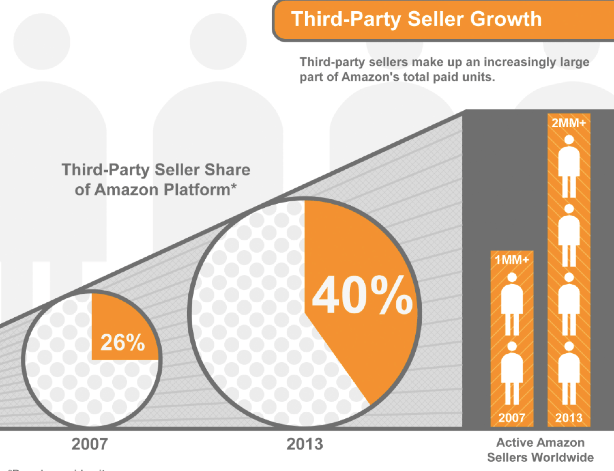
We sat down with Peter Faricy, vice president and general manager of the Amazon Marketplace, to talk about how he and his team are approaching personalization for the company's 2 million third-party sellers worldwide across 10 global marketplaces. Read our Q&A, which begins with Faricy providing some background information about Amazon Marketplace.

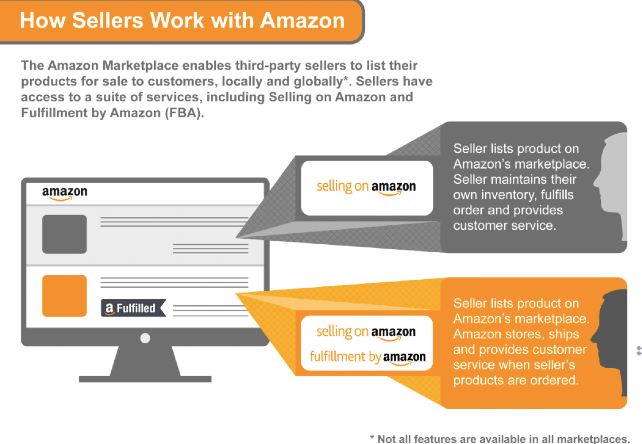
Peter Faricy: We have over 2 million sellers around the world selling across Amazon Marketplaces in 10 different countries around the world, and serving more than 200 million customers all over the world. So it's that business that me and my team are responsible for. What we specifically do is we provide all of the technology and the products and services that sellers need around the world to run their business on Amazon.

So we are sort of your e-commerce engine, if you will. And the technology we develop helps them run their business on the Amazon Marketplace and reach customers and grow their business very successfully. So that's kind of the quick background, if you will.

Leena Rao: So, one of the things that Amazon has been known for is being the pioneer of personalization and data mining to make the consumer shopping experience a much more curated type of shopping experience. So I am curious, sort of your view on this, and then how has that personalization strategy changed over time?

PF: Well, in the case of the Marketplace, we think about customers in two ways; we obviously think about the Amazon-buying customers and what they need and everything kind of starts with those customers in mind. But we also think of sellers on the Amazon Marketplace as our customers.

And sellers years ago began asking us questions around, what are the things that they can do to improve their business? How can they manage inventory better? What products should they be adding? How do they serve customers better?

So what I think you are referring to in this personalization, we developed some super-innovative technology three or four years ago that makes proactive, data-driven recommendations to each and every seller on the platform. And they range from suggestions on inventory quantities to new selections they should consider adding, to products they should consider fulfilling using a different surface than they use today.

We developed some super-innovative technology three or four years ago that makes proactive, data-driven recommendations to each and every seller on the platform.

And we have had great success with our sellers. We get a lot of positive feedback from developing these recommendations. And most of all, the way we kind of judge how helpful these are to sellers is how much they are used, and we know that sellers are actively using these recommendations to run and grow their business.

The part that's been interesting for me is that it's all self-service. So there is– when you mention how has it changed over time, we make every single day tens of millions of recommendations across all those different sellers. And on average a typical seller might have 100-plus recommendations in their queue in these different categories we have talked about before.

So we send them emails with recommendations. They can also take a look on our portal called Seller Central. On the Gateway page there is a platform called Selling Coach or Seller Coach and all the recommendations are also stored there.

And then we have many sellers that also plug into our business reports in different ways, and the recommendations are also available on our business reports. So we have got to serve up the recommendations in the manner that's most effective for each seller, but try to give them the benefit of the data we have, our evaluation of their performance, and try to help make recommendations on what they can do to grow their business.

LR: When did you start doing this?

PF: Yeah, I think we started our first test in 2009, and probably went full-scale in 2010, and now it's available in every country that we run a Marketplace in across the world, and every one of our sellers can access these recommendations.

LR: So what about the data and the signals you are using to help sellers personalize the Amazon experience for the end user, for me, who is, say, buying diapers on Amazon. How are you helping sellers then kind of draw the customer in through personalization?

PF: Yeah, I will try to give you a couple specific examples. I mean, as a customer one of the things that you rely upon is making sure that every product you are searching for is in stock.

And so sellers really value, they have told us, our guidance on when they are about to run out of stock and how much inventory quantity they should carry. And depending on the season of the year, particularly during the holiday season, it's difficult to know how much inventory to have in stock, as the sales ramp up closer to the holiday season, in November, December.

So one example is that we give — one of our most popular recommendations is called straightforward enough, almost out of stock. So we take a look at how much you are selling; we take a look at the inventory that you have in stock on Amazon, and we make a recommendation based on what we think the forward-looking demand for your product will be, how much more you should add to inventory.

So that's a super simple one, but honestly one of the most powerful ones for serving customers better, managing your inventory in e-commerce is very, very challenging, and sellers tell us they really find our recommendations useful.
fba-Marketplace-US.jpg-2

LR: What are some of the other way's that you are using data to kind of serve up additional recommendations which then brings traffic to sellers?

PF: When customers go to search for something on Amazon, and either they can't find the product at all, which we call no search results, or the search results are of low relevancy, we have a way to measure how relevant the results are we return. We take that information and immediately surface it back up to sellers who already sell similar products and recommend that they also begin to carry these products that customers are looking for.

LR: It sounds like Amazon wants to go beyond just providing the kind of access around the stock or in the fulfillment, but also help them on the backend with their sales and business and things like that.

PF: Yeah, exactly, I think that's a good way to say it. I mean, right now the most popular areas we are helping sellers on are things like inventory, which we talked about; helping them find new selection, new products to add to Amazon. We've got a lot of positive feedback on those recommendations.

Also, the fulfillment recommendations are super-critical, because we do offer a service called Fulfillment by Amazon, which is very popular with sellers, and some sellers choose to keep some inventory that they manage the fulfillment on their own. But for some of the more challenging inventory to fulfill for example, they may use Fulfillment by Amazon. And so we make recommendations based on the characteristics of how difficult these products are to fulfill or the seller's own performance of doing a great job on serving customers and getting the products there fast and easily.

And so for sellers who have a more challenging time doing that we make recommendations in fulfillment. And then you know the area that's been really growing quite a bit in popularity, is we are beginning to help sellers identify areas where they can improve the sharpness of their pricing.

So, for example, on the pricing world we surface up the sellers of all the different products you carry on Amazon, which of the products that you knot the lowest price on, and that allows them to go back and take a look at those products easily and determine whether or not it makes sense for their case to lower the price for customers.
fba-Rise3P-US.jpg

LR: When it comes to social data, I am curious how sellers are responding to that sort of data when it comes to commerce. And do you feel like additional data from the customer is something that sellers are becoming more excited about?

PF: Yeah, I think, clearly "social" being a kind of a broad term certainly in an area that sellers understand how important that is to customers. And one of the ways that we try to connect customers and sellers on the Amazon detail page, is a new feature we introduced earlier this year called Ask, A-S-K, and you could see now, but if you go down some of our detail pages, we do something really interesting which is that we allow customers to ask a question about a product.

One of the things that our sellers love about selling on Amazon is they are really in complete control of their business.

Let's say they are buying a camera and they want to know how good this camera is for shooting their children's sporting events. And it's kind of one of those questions, it isn't exactly covered by the data that is provided about the camera, but it's kind of a more "ask a friend" kind of a question. And we serve those questions up in an anonymous way to both the sellers of the items and also customers who previously purchased that item.

And so far we've had a great response rate. We've had answers come back very, very quickly and very, very thoughtful for people who already own the product or are selling the product.

So in the case of sellers who participate in this I think they have been pleased that they can, in this case, use kind of a more social angle to help customers find the product that's best for them.

LR: Do you think that social data is something to allocate from Facebook, and are there different types of social data that work and some that don't?

PF: Well, we don't publicly discuss what kind of data we use for the recommendation, but certainly social data that's publicly available like you are describing is certainly one of the inputs we use.

LR: From the sellers' standpoint, Peter, how do you balance serendipity versus discovery? I think that a lot of sellers want, I am imagining, their product to be discoverable. How do you balance that need for discovery with also having millions of sellers on the platform?

PF: Well, one of the things that our sellers love about selling on Amazon is they are really in complete control of their business. So when it comes to these data-driven recommendations we allow them to opt in and opt out. We make over 50 different recommendations today and they can choose which recommendations we service up to them based on the ones that are most important to them or most important for their product.

We challenge ourselves and we measure how useful they are. We know the majority of our sellers actually use our recommendation today, because we measure and track that. Then we also track how much improvement to their business did they get from using our recommendation and we hold ourselves accountable.

LR: What would you say the most popular tool that sellers using when it comes to personalizion? using some of these personal additional tools you offer?

PF: The No. 1 is an email called the Almost Out-of-Stock email. So those words "Almost Out-of-Stock" are almost like their own brand in the seller world. So that still remains by far the most popular type of recommendation we make today, because you could imagine for sellers who either sell a lot of products in total or who are trying to manage their inventory through different types of seasonality or who are also trying to manage their inventory across multiple marketplaces. Many of our largest sellers sell on other marketplaces in addition to Amazon.

So they have a really big challenge to keep up with the demands of managing their inventory well. So, the "almost out of stock" set of recommendations, this has been the most popular.

But I will say what's been increasing dramatically, is the appetite from sellers, and our ability to help them in adding new products to Amazon. And so we have millions of unique products at Amazon today and yet, I can tell you we have an opportunity to add millions more.

Our goal is to make it very easy for them to come join Amazon and very easy for [sellers] to make money, and we know that it's really a win-win.

And so we surface up recommendation for sellers and we kind of do it in a way that's smart and effective for them. So, if there is a seller who is selling lacrosse goals, and lacrosse sticks, and we notice there is an opportunity to add lacrosse jerseys and lacrosse balls, I obviously make those recommendations to them and so sellers really find, from the feedback they've given us, really find our selection recommendations to be really, really helpful and help them grow their business.

LR: What else is on a seller's mind and what are you thinking about when it comes to future products?

PF: One of the things that sellers give us very positive feedback on is that we don't charge sellers extra in order to receive these recommendations, and so you may see other participants in e-commerce taking other strategies here. But, we've for as long as the marketplace has existed, we don't charge sellers listing fees and we don't charge sellers fees for our recommendation.

So our goal is to make it very easy for them to come join Amazon and very easy for them to make money, and we know that it's really a win-win. If we could help sellers to serve customers better, our customers will be happy, sellers will get to grow their business and of course that creates a great Amazon Marketplace.

So, the fact that this is a really innovative service free of charge I think is also kind of unique even in today's world of e-commerce.

On the forward-looking front, I think without question there is a couple of topics that are on sellers' minds; one is that many of them see the opportunity to grow their business beyond the current geography or country they are in.

So we're beginning to make more and more recommendations for sellers on products they can sell outside their home country. And I think this is a game-changer, Leena, because if you think about the history of business, the only way you could experience it geographically was to maybe go plant the flag and open up a new office and add lots of capital and lots of overhead trying to figure out how to serve a new country. Being able to reach 10 countries on the Amazon Marketplace alone, plus customers from all over the world who shop those 10 marketplaces, is becoming a bigger and bigger opportunity for sellers. So that's one.

And then I think the other is back to this topic of selection. I think there are a lot of interesting categories at Amazon that customers are really happy with and want to find more and more selection. And one example would be softlines; so clothing, apparel, accessories, shoes. That's an area where we're beginning to have really great customer experience, and we're able to provide sellers with better and better recommendations of new products and new brands we love to see them add to the marketplace.