viernes, 30 de noviembre de 2012

You're just one employee away from a successful site

Posted 29 November 2012 10:16am by Paul Boag with 2 comments

Imagine you could improve your search engine rankings, increase user engagement, gain real returns from your CMS, cause a jump in conversions and have a positive impact on brand perception?

Imagine how that would transform your online presence.

Believe it or not, many organisations are just a single employee away from making this a reality. All they need is an online editor.

The role of an online editor

The majority of clients I work with have no clear long term leadership over their website. There is no one individual responsible for the site's success.

Yes, many have steering committees that oversee the site and yes, some have a project manager assigned to the site while it is redesigned. But, these don't replace a person whose job it is to make the site successful over the long term.

An online editor, who has real authority over the site, and whose job is dependant on its success, will transform your online presence.

This person will fulfil roles sadly lacking from most companies. Roles such as:

  • Visionary - Too many sites evolve based on knee jerk decisions. An editor can develop a long term roadmap and ensure that the sites evolution is apart of a considered plan.
  • Advocate - The editor not only creates the vision, but maintains it overtime. This means protecting it from others within the organisation that wish to undermine its focus to promote their own agenda.
  • Evangelist - Websites are often under utilised within an organisation. An editor should be evangelising the potential of the web internally and finding opportunities for it to be more beneficial to the business.
  • Content guardian - Probably the biggest role of an editor is to ensure the content on the website is up-to-date, relevant to users and reflects the organisation accurately.
  • Project Coordinator - Content isn't the only aspect of the website that needs managing. The editor will also be responsible for managing any contractor who is involved in improving the website.
  • Referee - Often a website can become a battleground between different priorities. Different stakeholders have different views and it falls to the editor to strike the balance and make a final decision about direction.

As you can see it is a large and complex role. Not something that can easily be done by an existing employee. Also, if I am honest it is not a junior position which means the person will not be particularly cheap to hire. However, if you consider the benefits, it is a role well worth embracing.

The benefits of having an online editor

At the beginning of this post I outlined a number of benefits that an online editor can bring. These were not flippant claims. I really believe that an editor could transform your site and have a significant impact on your business.

Lets look at each in turn so you can better understand where I am coming from:

Improved search engine ranking

I am amazed at how much money companies are willing to pay SEO agencies to manipulate search results. This money would be better off being spent on an online editor.

Google makes it clear that all they care about is relevancy. They want to connect their searchers with the best content for them. The answer therefore to being ranked well is simple, produce the best content.

The Google algorithm is very sophisticated. If you have an editor producing great, focused content, Google will realise and your ranking will increase.

Part of the reason for this is that great content gets linked to a lot. My own website ranks number one for the term "call to action" and yet I spent no time or money on SEO.

I just wrote a great article and lots of people linked to it. Spend money on content, not SEO.

Increased user engagement

An online editor wouldn't just be responsible for the content on your website. He or she would also be responsible for properly managing social networks, blogging and other forms of engagement.

Too many organisations' idea of engagement is posting press releases and news stories to Facebook and Twitter. However, it can be so much more.

By building up an engaged community you create advocates that promote your brand, give instant (and free) customer feedback and will be the people who link to you so improving your search rankings.

A better return from your content management system

Not only am I amazed at the amount organisations will pay for SEO, I am also shocked at the how much they will invest in their content management system and how little in the content!

Many organisations recognise that they have problems with content and think the answer is to simply throw technology at it.

However, although a content management system does help with the problem of getting content online easily, it also creates problems of its own.

When content is written by multiple individuals across the organisation it becomes fractured with different writing styles, perspectives and personality.

An editor can ensure a consistent style, be responsible for removing content and monitoring the accuracy of older content.

It's not that you shouldn't have multiple content contributors or that a content management system is unnecessary. Its just that a site needs somebody who is ultimately responsible for the quality of content being produced.

Improved conversion rate

Having an online editor insuring the quality and consistency of content across the site will in itself have a positive effect on conversion. However, this is just the start of what an online editor can do in this area.

The editor can also run an ongoing program of incremental improvements to your site based on multi-variance testing. This has proved time and again to be the secret to improving your conversion rate online.

A positive impact on brand perception

Finally, all of this work by the online editor in terms of content consistency, engagement and even conversion rates (which will be primarily about improving usability) inevitably leads to a more positive impression of your brand.

With so many obvious benefits to having an online editor, why do so few organisations have them?

Objections to hiring an online editor

A large proportion of the work I do these days is consultative. Organisations hire me to advise on their web strategy and governance. Yet despite asking for my help, the one idea they are most resistant to is hiring an online editor.

Typically three objections are expressed:

  • We cannot afford a content editor.
  • We have a web steering committee that does this role.
  • It would be politically too difficult.

Let's address each in turn.

We cannot afford a content editor

I find this a particularly confusing argument, especially when it comes from companies who have spent tens or even hundreds of thousands on a new website and who hand money to an SEO company every month.

It seems insanity to me that companies invest in design and a CMS to support content, but are unwilling to pay for the content itself!

Also, if the editor does his or her job correctly they should cover the cost of their salary and quickly become profit making.

Of course some organisations honestly cannot afford a full time online editor. However, that doesn't mean they could not have a part time one. This could either be an outside contractor or somebody within the organisation who takes on the website as part of their role.

In many ways the latter approach is preferable because they are situated within the business. However, often when this does happen the website is added to an already overwhelming list of things the person has to deal with.

If you are going to assign the website to somebody already in your company, you need to do two things. First, write it into their job description so they are held accountable for its success. Second, remove some other responsibility so they have time to tackle the new role properly.

Unfortunately another misconception is that the responsibility for the website can be spread across numerous individuals. This is where our second objection comes from.

We have a web steering committee that does this role

Many organisations have recognised the importance of their website and the fact that it does not sit nicely within departmental structures. Their solution to this problem is to form a web steering group. Unfortunately these groups fail to address many of the problems associated with running a successful website.

Part of the problem is that no one individual is responsible for the success or otherwise of the site. By spreading the load of running the site, you are also spreading the responsibility so that the buck does not stop with any one individual.

In addition the people who sit on these steering committees are often relatively senior with a lot on their plates. They don't have the time to invest in actually making things happen.

They are also not experts in the web. They don't have the time, experience or motivation to stay up-to-date on latest best practice online. Outside contractors such as myself can help bridge this knowledge gap. However, ultimately we are never going to replace having that knowledge in-house.

Of course there can be political and oversight reasons for having a steering group.

It would be politically too difficult

The website can be a 'political hot potato' for a company. It stirs up difficult questions around the direction and organisation of a business. Steering committees are often formed in order to deal with this tension.

Instead of a single individual or department owning the website and potentially shutting everybody else out, the responsibility is shared across all committee members.

The second political issue surrounding the appointment of an online editor is that individual departments have got used to being in control of their own content. They don't want to loose control of it to a central editorial power.

Fortunately neither issue is insurmountable.

First, there is no need to disband your web steering committee. In fact they play a valuable oversight role for your online editor. The editor would report into the steering group and have to demonstrate progress to them.

The steering group would be consulted on all major strategic decisions, but the day to day work and ultimate responsibility would fall to the editor.

Second, there is no reason why departments cannot still produce their own content. The role of the editor is not to write all of the content on the website, but rather provide strategic direction and ensure quality.

The editor should work alongside these content contributors, providing training, advice and helping them manage their content effectively.

Essentially the editor is an addition to your existing way of managing your site, not a replacement.

Yes, this is an additional cost, but can you really afford not to have one? Without an editor you will never generate the maximum return from the investment you have made into your website.

Ultimately the benefits outweigh the financial costs.

Camera phone head to head: Nokia N8 vs Lumia 920

Before getting started, you may well ask why this isn't a Nokia 808 PureView vs Lumia 920 ('with PureView') shoot out - after all the 808 is by far the newest Symbian phone with the highest specced camera? For two very good reasons:

We've already done that, effectively, as part of our four way test: 808 vs Lumia 920, plus the HTC One X and Lumia 900 (spolier: the 808 came out on top)

The Nokia 808 PureView's dominance in the world of camera-toting smartphones is uncontested, though its use of Symbian OS was controversial at launch. Anyone who wants the biggest and best cameraphone will have already bought it, plus any Symbian fans will also probably have it already, as the latest and fastest (and biggest) Symbian device on the planet.

Leaving the N8 vs the Lumia 920. 2010 vs 2012/2013, raw sensor size (1/1.8") and proper Xenon flash versus optical image stabilisation. It should be an interesting battle, and you should know by the end the pros and cons (from a stills camera point of view) of perhaps upgrading an N8 to a Lumia 920.

920 and N8

The methodology here is to take (in this case) nine use cases/scenarios, with different subjects and lighting conditions, show the full image from the new Lumia 920 and then crop in to show relevant central detail and/or differences in the shots from the two camera phones, with the N8 shooting in '9 megapixel, widescreen' mode and the 920 in its default '7 megapixel, 16:9' mode.

There's therefore a slight resolution advantage to the N8, right off the bat and helped by the larger sensor with larger pixels, but will the 920's OIS help level the playing field?

For each test, to help keep score, I'll give each shot a score out of 10 for accurate detail and colouring.

Test 1: bright sunshine, distant detail

In this case, the beleaguered UK retail chain Comet. Here's the full Lumia 920 shot, feel free to click to download the original JPG for further examination:

Original Lumia 920 photo, click to download or enlarge further

So there's detail needed here, of the store front and signage, plus bright light to handle. Here are the central crops from the Nokia N8 and Lumia 920 takes on the scene, side by side. In that order, so the N8 crop will, in this article, always be on the left, and the Lumia 920 crop will be on the right:

Comparison crops

In very good light, shutter speeds will be fast and I wouldn't expect any advantage to be gained from OIS. Accordingly, the N8 photo has slightly better detail from its superior optics, though it's telling that you have to crop in to this degree to be able to see any difference between the two shots.

Nokia N8: 9 points, Nokia Lumia 920: 8 points.

Test 2: murky lighting, distant detail

A gloomy day, spitting with rain, with a shot of a church, specifically focussing on the clock face and surroundings. Here's the full Lumia 920 shot, feel free to click to download the original JPG for further examination:

Original Lumia 920 photo, click to download or enlarge further

So a challenging job to make sense of so much texture in such bad light (the 920 made it look brighter than it actually was). Here are the central crops from the Nokia N8 and Lumia 920 takes on the scene, side by side. N8 on the left, and Lumia 920 on the right:

Comparison crops

By the way, for those wanting to complain that the crop areas aren't exact matches, the two cameraphone have different fields of view, so cropping in by 4x on each will result in a slightly wider angle (in this case, on the Lumia 920). The detail on the stonework and windows is very similar, perhaps a touch better on the N8's image, but then the clock roman numerals are blown out more in the N8 photo, plus the clock colour is better on the Lumia 920.

So we still haven't got close to really needing the OIS, though admittedly the N8 is a very well balanced camera phone and, in my hands, it's pretty steady(!)

Nokia N8: 8 points, Nokia Lumia 920: 8 points.

Test 3: indoors, artificial lighting, subject at 2 metres

A shop display under fluorescent lights, with plenty of detail on a selection of globes. Here's the full Lumia 920 shot, feel free to click to download the original JPG for further examination:

Original Lumia 920 photo, click to download or enlarge further

Masses of detail for the determined cropper like me - and I go in a long way this time, since there's plenty to see! Here are the central crops from the Nokia N8 and Lumia 920 takes on the scene, side by side. N8 on the left, and Lumia 920 on the right:

Comparison crops

Again, there's still enough light for the OIS to not be a factor, reducing this test shot to a trial of resolution and raw sensor/optics capability. The N8 shot has dramatically better detail, with much of the globe text readable, whereas the 920's image appears 'fuzzy', typical of over-zealous noise reduction and edge enhancement. See also the artificial-looking coastline of South Africa on the right hand crop.

On the other hand, the 920's image has more accurate colouration (to my eyes, comparing with the real thing). A win for the N8 overall though.

Nokia N8: 8 points, Nokia Lumia 920: 6 points.

Test 4: indoors, low lighting, automatic flash, human subject at 1 metre

The archetypal low light event/party/indoors shot, with Neil, my subject, not trying to hold a pose but also not making any quick movements (as you'd get in a party situation with people dancing or larking around!) Here's the full Lumia 920 shot, feel free to click to download the original JPG for further examination:

Original Lumia 920 photo, click to download or enlarge further

Flash was left on 'auto' and it fired for both phones. Here are the central crops, side by side. N8 left, and Lumia 920 right:

Comparison crops

Now we're well into interesting territory. On the one hand we have a super Xenon-flash-lit, super-crisp subject from the N8, with the only downside being that the flash dominates the exposure and the background is far too dark. A typical Xenon shot. On the other, with the 920, we have a OIS shot such that there's no camera shake for the 1/25th of a second the shutter was open. There's a very slight motion blur on the human subject and there's an excellent atmospheric background (with artistic bokeh) too.

The photo purist might go for the N8 version, as it's 100% crisp, but most people would go for the 920's shot, as it includes context as well.

Nokia N8: 8 points, Nokia Lumia 920: 9 points.

Test 5: indoors, low lighting, automatic flash, fast moving human subject

Another archetypal low light event/party/indoors shot, this time with me making a typical movement (raising my beer to say 'cheers'!) Here's the full Lumia 920 shot, feel free to click to download the original JPG for further examination:

Original Lumia 920 photo, click to download or enlarge further

We tried to time it so that the shot was taken at the same point in the movement in both photos, but the match is of course not perfect! Flash was left on 'auto' and it fired for both phones. Here are the central crops, side by side. N8 left, and Lumia 920 right:

Comparison crops

Right, this is where only Xenon flash will do. The OIS in the Lumia 920 may well be keeping the camera still, but if the subject is moving then the result will still be a blur with LED flash. Never mind that the background is darkish, the N8 with Xenon did its usual amazing job of providing a crisp image with super detail.

Nokia N8: 9 points, Nokia Lumia 920: 4 points.

Test 6: very dark, only minor artificial light, no flash, landscape scene

A very challenging scene to get right, especially handheld, as here. This, in theory, should be an easy win for the Lumia 920 with its optical image stabilisation, enabling it to leave the shutter open for much longer and to keep the image from being motion blurred. Here's the full Lumia 920 shot, feel free to click to download the original JPG for further examination:

Original Lumia 920 photo, click to download or enlarge further

Normally, for such a scene, I'd put a camera phone on 'night mode' and rest it on a tripod or wall, but here I was trying it handheld, on auto-everything, as a typical user might. Here are the central crops, side by side. N8 left, and Lumia 920 right:

Comparison crops

The biggest takeaway here is how well the N8 does, considering that I was shooting handheld. Exposure time was 1/8th of a second. As I say, I think it's party how well balanced the N8 is and how experienced I am at using it(!) Regardless, the Lumia 920 photo is slightly better, despite the smaller sensor, with the OIS making sure that the 1/6th of a second exposure didn't incur any camera shake - the crispness in the detail is enviable (look at the way you can see the panels of wood inside the porch) and even the digital noise is understandable. In contrast, the N8's image is blurrier and blotchier. And I never thought I'd hear myself say that about an N8 photo....

Nokia N8: 7 points, Nokia Lumia 920: 10 points.

Test 7: challenging lighting, typical foreground detail

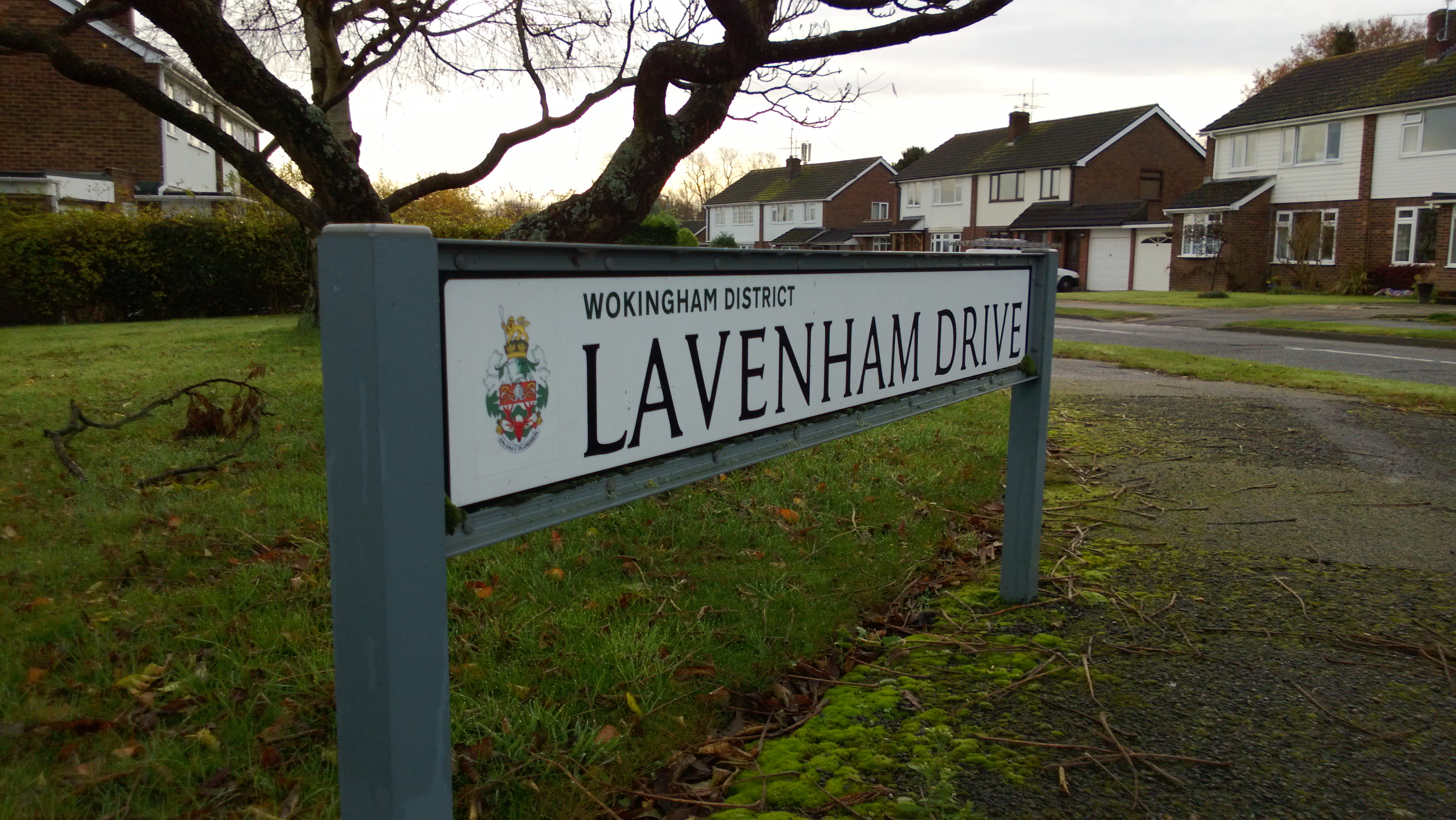
One typical scenario is where the normob user shoots into the brightest part of the sky, giving the camera phone a hard job to pull maximum detail out of a foreground subject. Here's the full Lumia 920 shot, feel free to click to download the original JPG for further examination:

Original Lumia 920 photo, click to download or enlarge further

The crest on the sign is a good point to pull detail from. Here are the central crops, side by side. N8 left, and Lumia 920 right:

Comparison crops

This comparison is rather telling in that there doesn't really seem to be any difference between the detail captured from the two devices other than the effects of the extra processing happening on the Lumia 920. The N8, famously, doesn't use image processing at all - what you snap is what you get. Most users would respond well to the enhancement applied by the Lumia 920 though.

Nokia N8: 7 points, Nokia Lumia 920: 8 points.

Test 8: good lighting, geometrical subject

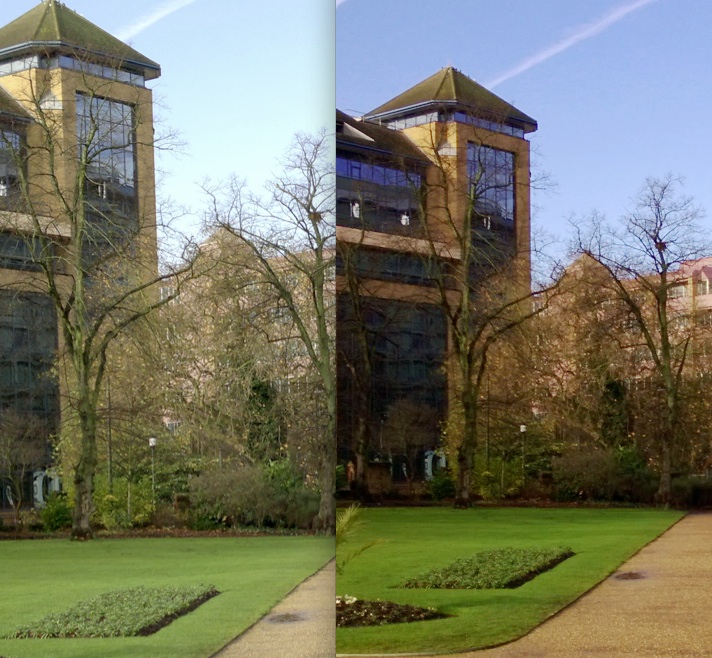
One scenario where I'd observed the Lumia 920's image processing to struggle is when the subject, in good light, has straight lines and extremes of contrast. In this case, a sunlit office block. Here's the full Lumia 920 shot, feel free to click to download the original JPG for further examination:

Original Lumia 920 photo, click to download or enlarge further

Plenty of lined texture and angles to crop in on! Here are the central crops, side by side. N8 left, and Lumia 920 right:

Comparison crops

Although the Lumia 920's image is quite decent when viewed on-screen, as is, once you crop in you can see the effects I mentioned above. The panelled building sides are much cleaner on the N8 photo, while there's a definite 'fuzz' to thin edges on the 920's image, exemplified by the loss of definition in the grid of wires near the top edge of the office. Maybe I'm being picky, but hey, this is a detailed head to head and that's what I'm here for!

Nokia N8: 9 points, Nokia Lumia 920: 7 points.

Test 9: good lighting, natural subject

What, then, about taking a natural subject, full of curves, greenery and far less straight lines? Here's the full Lumia 920 shot, feel free to click to download the original JPG for further examination:

Original Lumia 920 photo, click to download or enlarge further

A very realistic mix of material to capture here. Here are the central crops, side by side. N8 left, and Lumia 920 right:

Comparison crops

Perhaps, more than any other shot here, this exemplifies what many people will make of the Lumia 920's photos. Yes, if I crop in to see every last pixel, the N8 image is slightly better, with more detail. But, for once, I've not cropped in quite so savagely. Taking this part-crop, the colours and contrast in the Lumia 920's photo immediately impress. Even the sky is bluer in Windows Phone land, it seems(!)

Nokia N8: 8 points, Nokia Lumia 920: 9 points.

In summary

Adding up the points above (out of 90), we have the Nokia N8 with 73 and the Lumia 920 with 69, so a win for the older, Symbian-powered imaging smartphone, but by a narrower margin than I'd have thought, based on the raw specifications.

Now, I'd taken a wide range of subjects and conditions but there are two other things to bear in mind, which are somewhat at odds with each other but well worth emphasising:

  • If the user takes a lot of indoor photos of people then the N8 would score better as the Xenon flash would light moving subjects better
  • If the user is not an experienced, careful camera phone user (like me) then there's a fair chance that many shots would be affected by camera shake and here the OIS in the Lumia 920 would help enormously.

In addition, there's there are two extra factors which add weight to the Lumia 920's claim for a win here:

  1. flexibility in what to do with photos - Windows Phone 8 (despite some of its other failings) is pretty good at letting you share images online or send them on to contacts. In contrast, sharing is slightly clunky on Symbian unless you really know what you're doing or are prepared to slum it with Nokia Social.
  2. the size, brightness and conrast of the Lumia 920's display, for looking at what you just captured, knock spots off the first gen AMOLED screen on the N8 (which doesn't even have CBD tech, remember, with the hardware dating from early 2010)

The big question we started this feature with was "I have a Nokia N8 and love the camera - if I did switch to a Lumia 920, would I be disappointed in the camera?" 

I have to say that, based on my tests above, unless you take a lot of low light shots of moving people then the answer would be no, you won't be disappointed. The Lumia 920's camera isn't really a leap upwards in quality from the 2010 imaging king, but then neither is it much of a downwards step, as is true of the rest of the competition (e.g. iPhone 5, Galaxy S III), Nokia 808-aside, of course.

Which leaves other aspects of the various devices as the deciding factor. Watch All About Windows Phone over the next few months for a wealth of coverage of the Windows Phone 8 operating system - the question of how well (or badly) it could replace Symbian OS is another, much larger question than the specific camera focus here.

jueves, 29 de noviembre de 2012

Social Discovery Platform At The Pool Emerges From Beta With Funding, A Redesign & Users In 50 Countries

At The Pool, a Los Angeles-based social discovery network that aims to be the anti-Facebook (and anti-Twitter for that matter), today announced it has emerged from beta and is in the process of closing a $1 million seed financing round led by Clearstone Venture Partners. Also participating in the investment are a bevy of Los Angeles-based angels, including Buck Jordan of Canyon Creek Capital and existing investors David Carter (a founding member of Amplify), and distinguished professor at UCLA and one of the fathers of ARPANET, Leonard Kleinrock.

As part of its public launch, the startup is also announcing some significant product updates, including a new home page and redesign, which shift the service's focus from "The Daily Match" (the startup previously sent users a daily match by email based on location, history, interests and intent) to an action bar that allows users to navigate between activities, updates and notifications. The homepage now populates relevant content and updates that are unique to a member's matches and interests — rather than email blast-style.

Founder Alex Capecelatro sees social networks making the world a little less social, with the Web at large becoming more of a barrier to social discovery than a gateway. Rather than connecting you to people you already know, At The Pool is on a mission to introduce you to people you've never met before, offline, taking the potential awkwardness out of the equation by matching you based on your interests. The startup is showing that the demand for yet another social network is already there, especially among young people.

Capecelatro wouldn't share specific user stats, but he did say that the platform is now being used in over 50 countries and 25 percent of users return daily. In terms of demographic breakdown, 85 percent of users are under the age of 35 and half are under 25.

Given the success of interest-based social networks, Activities gets the biggest role in the new redesign, allowing users to post local activities they're interested in, at which point the site serves them with relevant matches in real time. In turn, "Updates" focuses on a different aspect of social discovery, offering users the chance to see when their previous matches (and nearby members) modify their pictures or profiles, for example, while the "Notifications" tab provides updates on new pools, contests and affiliated events.

In addition, the startup is adding some localization support for its growing international user base — more than 175 countries — and has added a "Share Page" that allow members to invite friends to the platform and receive rewards and prizes for doing so.

"It is refreshing to see the enthusiasm and innovation that the At The Pool team brings to the Internet by fostering the discovery and creation of close-knit communities of people whose off-line lives and interests are strongly overlapping," says Leonard Kleinrock. "This capability is extremely appealing and long overdue."

Like many other platforms, At The Pool users sign up for groups (or "pools") based on their background, interests and the type of people they're interested in meeting. At The Pool then provides the matches, and then the ball is in your court. New friends await. In this way, At The Pool feels like what you'd imagine the lovechild of Highlight, Match.com and Meetup to be. The big issue for the startup going forward, as it is with similar services, will be trust and security.

The possibility of meeting new people that share your passion for softball or Romantic poetry is exciting, but how can you be sure you're not about to meet up with a creeper? At The Pool offers profiles and the ability to upload pictures, as well as Facebook verification and matching based on mutual friends, but this is either not the world's most reassuring fail safe or you're limiting your scope of potential "new friends" based on shared connections. Plus, you do get to talk to someone first for a little chat-based vetting before meeting them live, in 3-D. (Not that this goes all the way towards reassurance, either.)

Nonetheless, these kinds of worries seem to be the prerogative of older people, as the world's young people are the driving force behind social gaming and the wacky, varied world of collaborative consumption, for example. Try getting your mom to put her apartment up on Airbnb.

While the site is free to use, it wouldn't be surprising to see At The Pool explore potential monetization opportunities by offering, for example, an enterprise model, in which the service launches pools for companies, conferences, universities, non-profits, etc. Pay to enter the company pool, for instance.

It's hard to say if the generalized (non-vertical) social discovery network can reach any significant traction, but few would argue that there's demand for meet-new-people and serendipity apps. It seems as if we run across a new one each month. But it's an important experiment in interest-based social networking, not to mention that it also helps to have a good-looking UI.

Check out TechCrunch's Pool here.

Dropcam Launches New iPad App

Dropcam has recently launched a new iPad app that allows users to watch multiple streams on an Apple tablet. The app is designed to allow you to take a peek at what's going on in front of your Dropcam camera at anytime, from anywhere.

With both your Dropcam installed at home and the app, you can watch up to four simultaneous streams — both from your own cameras or from a shared or public stream. You can also set up the app to receive push notifications on your tablet or phone as well as emails anytime something happens (for example, if somebody unplugs it or if there's noise in the house). Unfortunately, the notifications can't currently be customized, so you can't set the app to notify you only while you're at work during a certain time of the day.

This new app is supposed to complement Dropcam HD, the company's camera released earlier this year. Dropcam built the hardware itself, without relying on off-the-shelf components, like in its previous model. Producing the camera in-house dropped the price from $249 to $149, explains CEO and co-founder Greg Duffy.

The camera can stream in 720p and doesn't have an Ethernet port — it only works on Wi-Fi. Duffy explained to Mashable that only about 3% of their users connected their cameras to their router, so it was an easy decision to drop the wired connection compatibility. With a viewing angle of 80 degrees, the camera should be able to capture almost all that happens in a room if you place it in a corner. It also has night-vision and can transmit sound in both directions. "Dogs love that," says Duffy.

The new camera is also designed to be as easy to use as possible, almost plug-and-play. In fact, the instructions claim that you just need to connect your Dropcam to your computer once. That's when you set up its Wi-Fi connection. After that, according to the company, you can unplug it from your computer it and place it anywhere you want to begin streaming video.

SEE ALSO: Monitor Your House or Business From an iPhone

The recording is available in the cloud for 7 or 30 days, depending on the plan you choose, and the prices vary from $9.99 to $29.95 a month. Without a plan, you're still able to watch live video anywhere, but you won't have DVR capabilities. You can also share your favorite clips on social media or store them in the cloud. If you add a plan to the price of the camera, that makes it a pricey product, but Duffy suggests it costs less than storing everything on a computer that you keep powered on 24/7.

The company seems to have taken security into account as well, encrypting your data and setting your stream as private by default, although you can share your camera view with anybody you choose or even open it up to the public. Several Dropcam users have done that, Duffy told Mashable, in fact, there's even a dog shelter that allowed people to choose their dog after seeing it on the video stream.

Dropcam's downsides are that it's not usable outside — it's not water resistant and it obviously needs to be plugged in at all times. Also, as noted, at the moment there is no way for users to customize the notifications, although that's a feature Duffy says they are working on and will be available in the future. Not having the possibility to connect it directly to your router might give issues to people who don't have a strong Wi-Fi connection, and if you want to install more than one Dropcam in your home, you better have a fast connection or that won't be possible.

What do you think of Dropcam? Would you use one to monitor your kids or pets? Let us know in the comments.

Olive and Dropcam

Photos by Mashable and courtesy of Dropcam.

Dumb ways to die, smart ways to do viral

Posted 28 November 2012 09:45am by Vivienne Egan with 1 comment

I woke up last Monday after a weekend of not much social media, and while checking my networks on the train to work I discovered that about 6m people had beaten me to watching Dumb Ways to Die, which could also be re-named as "the little train safety campaign that could".

As I type (a week later), it is sitting on a tidy 26,697,158 YouTube views. It's certainly getting a seat at the table of greatest viral campaigns ever.

That's no mean feat for a public transport authority in Melbourne, Australia, using an unknown artist, and no media spend. It seems to be targeting the youth market, and they appear to be going about it the right way.

If you haven't seen it on your Facebook wall, Twitter, Reddit, Buzzfeed or Gawker, here it is:

So what are they doing right?

The obvious: it's a ridiculously catchy song…

Plus it's got that cute, indie sound that's so popular right now. In a stroke of pure genius, you can even download the track from iTunes (where it has cracked the top 10 downloads in the singer/songwriter category) or SoundCloud.

I was away at the weekend with friends, and we sat around playing it on guitar and recording our own version (hey, that's what Saturday night is for, right? ...Right?).

It's not personal

How old are those jelly-bean people? What gender? What race? Are they rich, poor, educated? Who knows? Who cares? Stupid behaviour doesn't discriminate, so this ad doesn't single out any particular demographic.

It's not location-specific

Grizzly bears, rattlesnakes and moose are not native to Melbourne, so it's accessible for people all over the world (might as well spread a good idea; trains are everywhere, as are dumb people).

It goes against received wisdom

Compare, for example, this teen-facing road safety advertisement:

Teenagers don't want to be told what to do; they're also not that keen on being emotionally manipulated. There's no preaching in this campaign, it's colourful and kitschy, not bleak and bloodied.

With the message slipped in subtly and elegantly at the end, it doesn't feel like you're being, excuse the imagery, bashed over the head with it.

dumb-ways-to-die-abbey-road-cover

There's more to come

The video and the downloadable track are just two components in this campaign, there's a separate Tumblr and interactive site, and actual media spend will begin on the campaign shortly.

So will it actually work?

Plenty of people will argue that the key message about train safety is going to be lost because it's at the end of the song. It's a matter of taste, of course, but the fact that people are downloading it to include on playlists means that it'll be part of collective consciousness for a long time to come.

That it encourages accountability and taking responsibility for your actions will be key to its success.

Behaviour change is a hard thing to market; it's not an easily measurable target – there is no conversion rate, and only time will tell if it is effective. However, in labelling train accidents 'dumb' instead of tragic, this campaign taps into an important principle for behaviour change marketing, and that is that peer pressure and shame can make people change their habits (the guys from Freakonomics have an excellent podcast on this very topic). No-one wants to be thought of as dumb.

Reporting from a limited research sample, my findings are that it is 100% successful: as I went to cross the road against the lights at lunch, that perky little melody popped straight into my head.

Did I stop? You bet. I don't want to be a smooshed little jelly-bean.

Vivienne Egan is Content and Social Media Executive at No Pork Pies and a guest blogger on Econsultancy. 

iSchool Campus Wants To Bring The Next-Gen Wired Classroom To K12 Education

Technology is increasingly becoming a part of the classroom experience, particularly thanks to smart devices. Tablets and iPads offer students a more portable, engaging and interactive experience than many of the tools of old, and schools are catching on. The San Diego School District's recent purchase of 26,000 iPads is just one of many recent examples of districts and states pushing to deploy tablets in their schools.

The problem, however, is that, while the use of smart devices and learning-management systems is growing (and the quality, especially of the latter, is improving in turn), many schools still lack the infrastructure that would enable their various digital tools to work together. Not to mention, if schools don't have a secure, working Wi-Fi network, there's little point in buying 26,000 iPads.

This is where iSchool Campus thinks it can help. Launched in 2011, the Utah and Washington D.C.-based startup has developed a collaborative, "whole-school" learning environment that includes iPads (for each student), teaching and classroom-management tools and hardware all integrated into a secure Wi-Fi network. The startup is initially targeting K12 schools and districts, but with blended learning gaining in popularity, iSchool sees application for their infrastructure in both public and private sectors and is currently in discussions with government-training facilities.

iSchool has been running pilot smart school programs at 13 charter, private and public schools in the U.S. (across eight states) and is looking to expand its reach both into more K12 schools and enterprise training programs. To help fuel that growth, the company is announcing today that it has raised $2 million of a $4 million Series A funding round led by Crocker Ventures.

There's a lot of noise being made about creating and implementing "wired classrooms," and while that's becoming more of a reality and less hot air, Chairman and CEO William Nixon tells us that many classrooms have the software component already but are still lacking the hardware. Schools are beginning to demand a holistic, or integrated, approach. iSchool's approach to this is to establish a high-speed Wi-Fi network across the school, through which it integrates its hardware offerings, which include iPads for each student and teacher, an iMac lab, Macbook Pros for teachers, HDTVs, a remote audio system, classroom-management software and professional development tools.

Through the company's classroom interface, teachers can then deliver and monitor curriculum, quizzes, tests and apps on their students' iPads, which the company believes can help the classroom become a more wired, engaging and data-driven learning environment. While iSchool Campus aims to be an end-to-end educational solution, much of the experience (at least on the student's end) revolves around the iPad.

The iSchool CEO tells us that the company has been working closely with Apple to configure its devices, particularly on specs, system configurations and government regulations, and is taking advantage of the special rate Apple offers to K12 schools using its hardware. As a result, the company is focused on using Apple hardware (at least for tablets, laptops, and desktops), but is open to using other devices. And as to whether students will be given the new iPad as opposed to the first generation? The company says that it only deploys "the latest hardware and software" unless schools specifically request otherwise.

iSchool Campus installs its own proprietary apps on all iPads deployed in the classroom, which focus mainly on classroom management and teacher/class interactions, including its own quiz and tutoring apps. Schools can leave it at that or can then work with iSchool to configure access to third-party education apps, picking and choosing which apps they want to use as they go.

While there's plenty of demand among schools for an end-to-end, hardware + software learning environment, this kind of solution doesn't come cheap. iSchool Campus prices its services at between $400 and $600 per student (per year), which comes with a three-year contract. So, if an average public middle school has 500 students, that's $300K/year (on the higher end of the pricing spectrum). With that cost, schools, districts, and states are obviously going to (as they should) take a long, hard look before signing that contract.

iSchool covers a lot of its bases in terms of a diversity of hardware options, but it's all about how the product stands up. The company isn't the first, nor will it be the only one, to attack this space. That being said, it requires a lot of legwork to build relationships with the government (subsidies) and hardware providers, and to sell CIOs, administrations, and decision-makers in districts and at the state level. The sales process isn't short, all of which is to say that there's not exactly a low barrier to entry here.

That may work in the company's favor. It also helps, from the school's perspective, that the company attempts to balance out costs by offering full technical, configuration and maintenance support. iSchool also claims that it can install its systems in about 10 days and does a lot of that configuration offsite and completes onsite work during non-school hours. But, again, with implementation requiring a lot of onboarding and training, the total cost could make some schools nervous.

The more the company is able to show that its learning system can have a significant positive effect on student outcomes, the more it will be able to assuage concerns coming from teachers and administrators. It also helps that states are increasingly instituting policies that encourage (and in some cases mandate) the introduction of digital tools and devices into the classroom. So the incentives for schools are growing, especially when they include subsidies, which works in iSchool's favor. And, in the end, for education as a whole.

Low budgets and lack of talent leaves Asia-Pacific lagging in digital marketing

Posted 28 November 2012 22:00pm by Claire Brinkley with 2 comments

Things aren't looking great across the Asia-Pacific region in terms of digital marketing as new figures indicate that marketers in APAC may be lagging behind when it comes to ROI metrics, talent and digital strategies.

These findings come from a new report called Digital Marketing Performance Dashboard 2012, which was conducted by Adobe and the CMO Council.

The report was constructed from the results of an online survey that was taken by 295 senior marketers in Asia-Pacific, including marketers from Toyota, 20th Century Fox, Tupperware, Citi Group, Nokia and Yahoo.

Where APAC is lagging behind

It seems the advantages of digital marketing are well understood in the Asia-Pacific region with 93% of marketers surveyed stating they believe it can create a competitive advantage for their company.

Unfortunately though, only 6% believe their company has a high level of digital marketing proficiency and a huge 40% feel they need improvement and are lagging behind

The report also found that companies in the Asia-Pacific region lack "sophistication and depth of measurement" when it comes to measuring organisation spend, something which Mark Phibbs, Adobe's senior director for marketing, Asia-Pacific, believes will stop APAC companies moving ahead of the curve.

The implication of this lag in digital advancements is that while consumers in the region continue in their adoption, consumption and dependence on digital engagements, marketers are struggling to provide targeted, intelligent and personalised experiences that can have a direct impact on the success of the business.  

As global marketers adopt measures that link back to revenue-driving metrics, APAC marketers are struggling to move beyond surface-level KPIs that simply report clicks, views and baseline consumption.

Leveraging data to generate analytical insights is critical to help the region's marketers move ahead of the curve in terms of tracking and mapping customer insights and behavior.

Australia and Korea took the lead in the analytics area, with 84.5% and 84% of marketers indicating they use digital marketing analytics and reporting. Singapore followed in third place with 68%, India with 63%, Hong Kong with 61.5% and China significantly further behind with only 33%.

Despite somewhat high numbers of usage, marketer's confidence in their ability to measure value and return was extremely low, with only 3% believing they excel in this area. Phibbs says this definitely needs to change. 

The data has highlighted significant gaps between countries in their use of digital marketing analytics and reporting technologies. 

We can expect to see countries with the budget and skills to invest in establishing sophisticated technology platforms surge ahead of countries that are struggling to set up a similar infrastructure. 

Talent crunch & budget cuts

One of the key insights to come from the report was that APAC companies are struggling to get the right digital marketing talent for their business due to low budgets.

Forty-nine percent of respondents said their current marketing teams didn't have the right skills or experience to handle digital marketing strategies and 38% said that a lack of hiring budget prevented senior talent from being brought on board, resulting in lesser skilled marketers.

Low budgets was also listed as a reason why companies couldn't undertake proper testing and analysis, with 53% of respondents pointing to this as a significant issue. 

In terms of budget spent on digital marketing, Australia was clearly in the lead of other APAC countries with 41% percent of Aussie companies spending a quarter or more of their budget on digital marketing. This was well above Hong Kong who followed in second place with 28%, China and Singapore with 24% and India and Korea with 20%. 

Currently the highest level of funding seems to be directed towards website content development and performance optimisation, search engine optimisation and email marketing. However, Phibbs believes that spend in Asia will rise in 2013, particularly in Singapore. 

The percentage of marketers expecting to allocate more than 50% of their budget is set to almost double in the fiscal year head. The commitment to digital is clearly happening.

Close to 30% of Singapore marketers surveyed plan to increase digital marketing spend to between 25  - 49 percent while 14% wants to dedicate more than two-thirds of their marketing budget to digital marketing in the fiscal year ahead.

Where Australia stands out 

Australia spends more money on digital marketing than any other country in the Asia-Pacific region and appears to be the most dedicated in the region when it comes to digital analysis. Two-thirds of Australian marketers also engage multiple agencies for their initiatives, which is higher than any other APAC country. 

While Australia seems to be holding its own quite well, Phibbs warns Aussie marketers that they shouldn't get complacent. 

Australia has realised the benefits of digital early compared with the rest of the region and has invested accordingly.

The results we're seeing from Australia are reasonable, particularly compared to other countries in the Asia Pacific region, but it shouldn't stand on its laurels.

Going forward

Liz Miller, CMO Council's VP of global programs, said the key issues that marketers should be focusing on if they want to improve their digital performance going forward are evolving thinking, enhancing targeting and segmentation and better directing relevant content. 

It is clear that marketers across the region are ready to run into a digital future, but as the hyper-connected digital consumer continues to evolve, marketers must invest in the people, processes and platforms that will better predict and prepare for these engagement opportunities. 

Asia-Pacific companies are competing globally and digital marketing is a critical factor in identifying and qualifying new markets, reaching new customers, building the brand and maintaining strong business opportunities internationally. 

Phibbs also has four tips for APAC companies looking to turn things around in 2013.

  • Appoint senior digital marketing leaders to own the marketing strategy alignment to key business drivers
  • Make sure your organization is measuring the right elements in order to demonstrate ROI
  • Boost in-house dedicated, skilled analytics resources to drive the shift from tactical KPI measurement to prove ROI and leverage data for analytic insights
  • Continue investment in measurement and optimization technologies as well as ongoing staff training